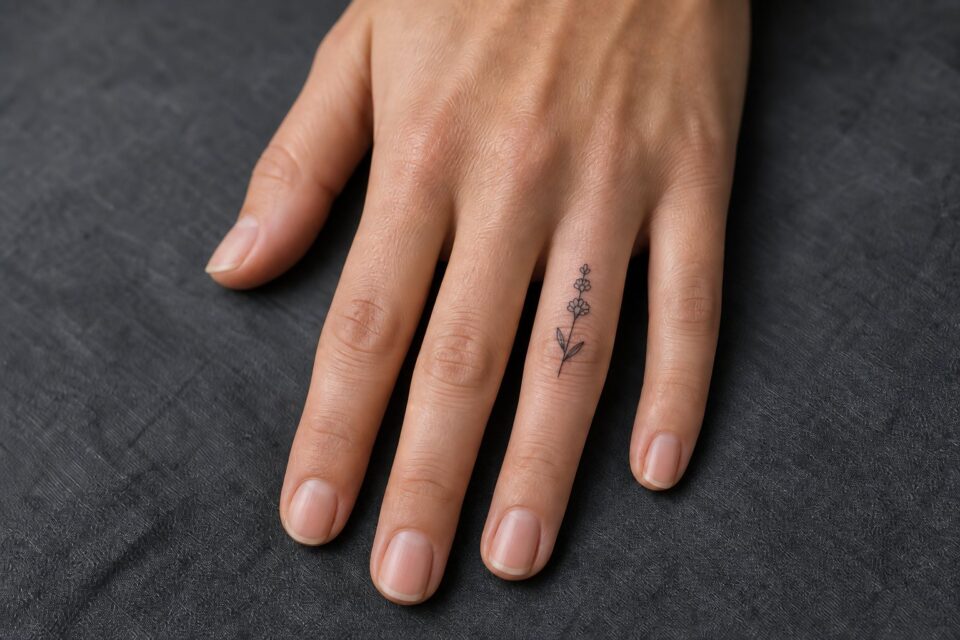
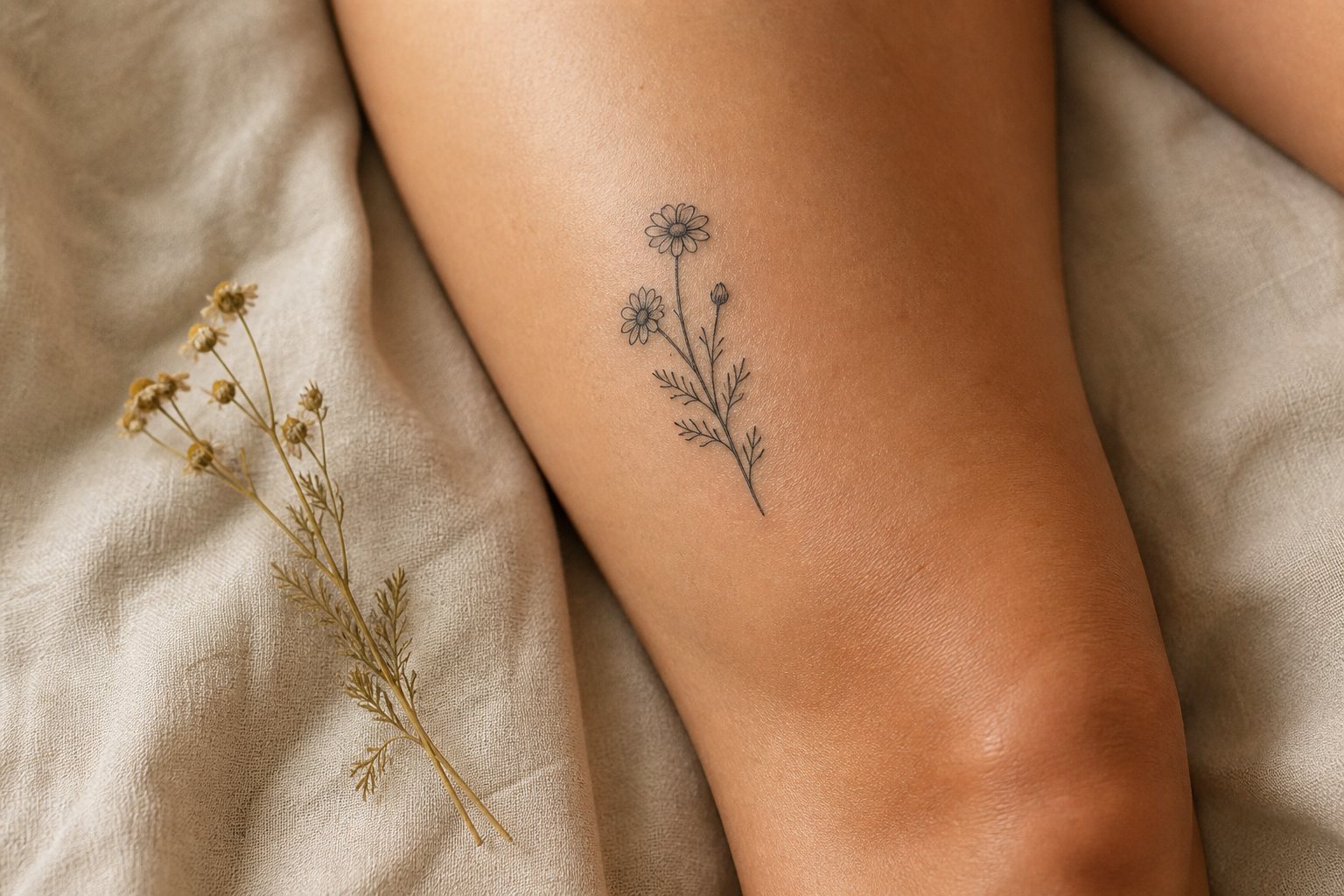
A botanical tattoo reference set should help an artist understand the plant, story, growth stage, and visual qualities you care about. It should not be a folder of finished tattoos to combine. Real plant material gives the artist more specific structures and fewer borrowed compositions.
Choose the plant for a reason
Record the common and botanical name when possible, where the plant grows, and how it connects with the story. A family garden rose, roadside fern, kitchen herb, or tree outside a first home carries different references from a flower chosen only for its assigned meaning.
Decide which stage matters: seed, shoot, bud, full bloom, fruit, dried stem, or seed head. Growth stage can hold time, memory, potential, or change without adding another symbol.
Photograph useful details
- The whole plant in its natural structure
- Stem direction and branching
- Leaf arrangement from several angles
- Front and side views of the flower
- Buds, seed heads, thorns, roots, or damaged edges
- A scale reference when size is visually important
Use even light and preserve uncropped originals. One perfect bloom may hide the irregularity that makes the plant recognizable to you.
Show scale without using a screen zoom
Place a ruler beside the plant detail or photograph it next to an ordinary object whose size is clear. Then print the proposed tattoo reference at two or three widths. A macro photograph can make a chamomile centre look enormous and encourage detail that will not belong in a small piece. Keeping the real plant, the printed scale, and the body placement on one page makes the tradeoffs easier to discuss.
Choose the drawing language separately
Botanical accuracy
Species structure and identifiable features take priority. Choose an artist whose portfolio supports that level of observation.
Loose gesture
Movement, bend, and rhythm matter more than complete detail. A quick line reference may demonstrate the energy without supplying a composition.
Geometric reduction
The artist may simplify leaves, intervals, and bloom shapes into a system. Identify which natural feature must remain.
Decorative arrangement
Several plants can form a bouquet, frame, or border. Use hierarchy so every specimen does not compete equally.
Example: a reference page for one chamomile tattoo
Put the full plant photograph on the left. It shows how the stems branch and how the flower heads sit at different heights. On the right, place a close photograph of one centre and one side view of a bloom. Underline the feature that separates the plant from a generic daisy in your memory. It may be the raised centre, the uneven white petals, or the thin divided leaves.
Below the photographs, write the personal source in two sentences. Name the garden, person, season, or routine without turning it into a symbolic definition copied from a flower list. Then add the proposed body area and two printed sizes. The artist can now compare plant identity with the amount of detail each size can hold.
Finish with a short list of open decisions. You might care about the bent main stem and three flower heads but leave the exact leaf count, shading, and direction of the smallest branch to the artist. Add two portfolio images from that artist to show why you chose her. Label one for line treatment and the other for spacing.
This page does not prescribe a composition. It records the source, the identifying details, the scale problem, and the decisions that remain open. The same method works for a rose, fern, herb sprig, seed head, or houseplant cutting, but the evidence on the page should change with the plant.
Assemble a concise reference set
Include three to six plant images, a short story note, the preferred growth stage, placement ideas, and a few labelled style references. Write what each external image demonstrates: line weight, amount of detail, spacing, or orientation.
A useful botanical brief lets the artist see the real plant and the personal reason it matters while preserving room to draw it in their own language.
Build a reference sheet an artist can read
A useful botanical reference is less like a mood board and more like a small field note. Start with one plant, not ten. Save a clear view of the full stem, then add close views of the leaf edge, flower center, seed pod, or thorn pattern that makes the species recognizable. If you photographed the plant yourself, keep the unedited original as well as any cropped version. The extra context can help an artist understand what belongs to the plant and what is just shadow.
Circle the two or three details you care about most. Maybe it is the bend of a poppy stem, the uneven petals of a garden rose, or the paired leaves on an olive branch. An artist can simplify the rest without losing the part that made you choose the plant. This is especially helpful when the tattoo needs to fit a narrow forearm, ankle, or rib placement.
- Include at least one image with a plain background.
- Add a photo of the body area so the artist can judge proportion.
- Label any detail that must stay, and any detail you are happy to drop.
- Keep style references separate from plant references.
That last point matters. A botanical photo explains the subject. A tattoo reference explains line weight, density, and mood. Mixing them into one collage can make it hard to tell whether you love the flower, the drawing style, or both.
Name the plant as precisely as the story requires
A common name may refer to several species, and cultivated varieties can differ widely. If botanical accuracy matters, record the scientific name from a reliable plant source or garden label. If the plant is important because it grew at home, photographs of that exact specimen may matter more than perfect classification.
Write why the plant belongs in the tattoo. Birth month, place, scent memory, family garden, resilience, and simple visual love are all valid, but they lead to different source choices.
Photograph more than the flower
Capture the whole plant, branching habit, leaf arrangement, buds, seed heads, stem texture, and the underside of a bloom. Take front and side views in even light. Include one photograph with a ruler or familiar object if proportion matters.
Do not remove every imperfect leaf. Bends, insect damage, asymmetry, and seasonal change can make the source personal. Mark which irregularities you want the artist to notice.
Choose the plant’s season
The same species can appear as a tight bud, full bloom, falling petals, fruit, dry seed head, or winter stem. Select the stage that matches the memory or composition. A growth story does not always require peak bloom; an opening bud or persistent dry structure may say more.
For several family flowers, different stages can create hierarchy and movement without assigning one person a larger “importance.” Explain that compositional role in the brief.
Separate specimen accuracy from composition
Botanical references tell the artist how the plant is built. They do not have to dictate the final arrangement. A stem may be curved to follow a forearm, leaves may be spaced for clarity, and overlapping flowers may be edited. Decide which traits cannot change and which may respond to the body.
Build a hierarchy
Choose one lead bloom, leaf cluster, or branch direction. Supporting elements should guide the eye rather than compete at equal size and contrast. If every plant must appear fully, consider a larger area or separate studies.
Use historical and artistic references transparently
Botanical plates, herbarium sheets, family embroidery, and ceramics can inspire framing or line language. Record the creator, collection, date, and rights status when known. A public-domain source can be legally reusable, but an artist should still interpret it for your body rather than mechanically tracing the whole plate.
Finished tattoos should demonstrate qualities such as density, placement, or colour handling, not supply a composition to copy. Credit the tattoo artist in your notes so authorship stays visible during research.
Run the leaf-and-gap test
Print the proposed composition at actual size and count the smallest spaces between leaves, petals, and crossing stems. If the plant turns into a dark bundle without zooming, increase scale or remove secondary material. The defining silhouette should still read from normal distance.
A sparse plant can use slightly stronger lines and remain delicate. A dense plant may need a broader placement. Line thinness alone cannot replace spacing.
Describe colour from observation
If colour matters, gather several photographs in neutral light. Note variation within petals, leaves, and stems instead of naming one digital swatch. Decide whether the artist should aim for naturalistic colour, a limited emotional palette, or black ink.
Review healed colour work in the chosen artist’s portfolio. For general long-term skin care, dermatologists advise sun protection for healed tattoos; see the American Academy of Dermatology guidance.
Deliver a compact reference packet
Include the plant name, story, exact specimen photographs, chosen season, two defining traits, composition preference, placement, scale range, and what may be simplified. Add a few relevant examples from the artist’s portfolio.
Keep the larger archive for yourself. The artist needs enough evidence to understand the plant, not every attractive flower image you found. Careful selection is what turns botanical research into an original tattoo brief.
Use pressed plants as shape references, not the only truth
Pressing changes depth, angle, and sometimes colour. A flattened specimen clearly shows leaf arrangement and can preserve a family plant, but it may hide how petals cup or stems rise. Pair it with living-plant photographs or reputable botanical images if dimensional form matters.
If the pressed object itself is the memory, tell the artist to keep its flattening, tears, tape, or notebook placement. The tattoo can depict the keepsake rather than an ideal living specimen. Naming that distinction prevents a well-meant botanical correction from removing the very qualities you wanted to preserve.
Photograph the sheet before removing anything from an old album or herbarium. Include labels, dates, and page edges in the archival image even if the tattoo uses only the plant. The surrounding document may explain provenance later.
Do not apply liquids, adhesive, or cleaning methods to a fragile specimen for the sake of a clearer photo. Use even light and a stable surface, and ask an appropriate conservator when the family object has historical or material value.