
A pet memorial tattoo does not need a paw print, a halo, or a complete portrait to be recognizable. The detail you miss may be much smaller: the fold in one ear, a scratched tag, the route you walked every morning, or the shape your cat made when sleeping in the window.
Those details give a tattoo artist more to work with than a ready-made symbol. They also make it easier to create a design that belongs to one animal and one relationship.
The nine directions below are not finished tattoos or stencils. Each one is a way to organize personal source material, meaning, and placement before an artist draws the final piece.
The rule behind this guide is simple: begin with evidence from your pet's life, not a symbol selected from a memorial list. The final drawing can then stay personal without asking a tattoo artist to copy somebody else's work.
A quick comparison of the nine directions
| Direction | Personal association it could hold | Placement starting point | What makes it specific |
|---|---|---|---|
| The familiar ear line | Recognition and presence | Inner forearm or back of upper arm | One uneven ear, fold, or fur break |
| The walk home | Routine and companionship | Forearm or collarbone | A real turn from a familiar route |
| The worn collar | Daily life and closeness | Upper arm or side rib | Clasp, stitching, or wear from the real collar |
| The repaired toy | Play and personality | Outer calf or upper arm | A torn edge, repair, or favorite shape |
| The sleeping place | Safety and shared home | Shoulder blade or side rib | A window, cushion, doorway, or curled posture |
| The nose pattern | Immediate recognition | Upper arm or outer thigh | The pet's actual nose texture and outline |
| The garden they returned to | Place and memory | Back of arm or shoulder | A real plant paired with one pet detail |
| The quiet tag | Identity kept private | Inner forearm or ankle | Tag silhouette, scratch, or hidden mark |
| Two lives under one roof | Shared household memory | Shoulder blade or forearm | Two different traces joined by one place |
1. The familiar ear line
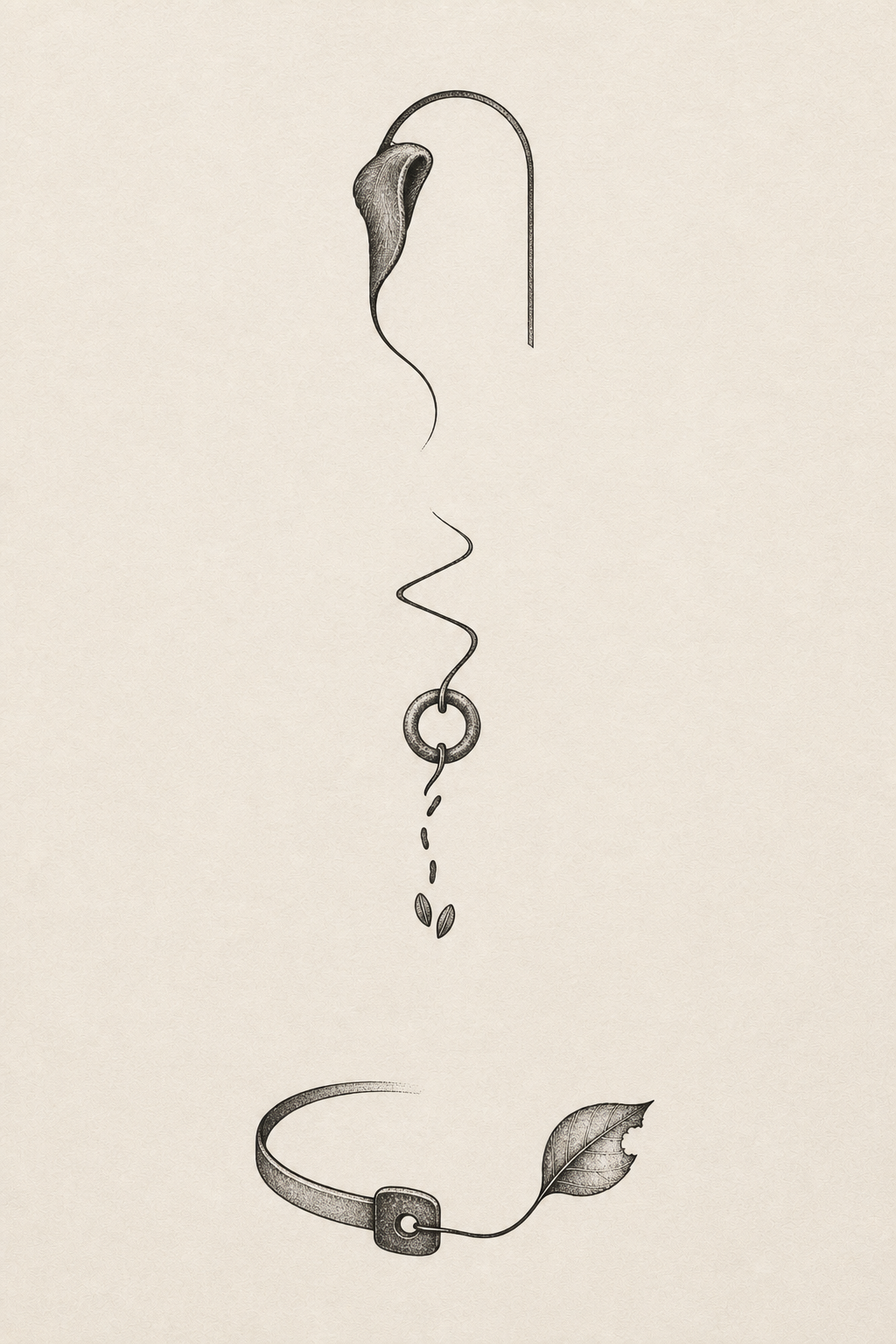
Start with the outline that made you recognize your pet from across a room. It might be one upright ear and one folded ear, a clipped corner, a soft spaniel curve, or a small break in the fur.
Instead of drawing the whole head, an artist could reduce that feature to one confident contour. A second line might come from the way the neck turned when the pet heard its name. The empty space between the two lines does much of the work, so the result can stay small without becoming a generic animal outline.
That uneven ear becomes the point of recognition. To anyone else it is a small contour. To you it may be the shape that made the room feel occupied.
An inner forearm gives a narrow contour room to run lengthwise. The back of the upper arm works for a softer curve that reveals itself as the arm turns. Bring clear side-profile photographs, including imperfect ones where the ear sits naturally.
2. The walk home
Choose one recognizable bend from a route you walked together. It could be the corner where the leash always tightened, the path around a pond, or the last turn before home. The full map is usually unnecessary.
The route line can pass through a small collar ring, nose mark, or leaf from the street. Keep the path slightly irregular. A perfectly geometric map loses the physical memory of stopping, pulling, circling, and waiting.
Routine is the point here. Repeated walks are where much of the companionship lived: the same corner, the same pause, the same pull toward home.
The forearm suits a longer route with one clear change of direction. A short horizontal version can follow the collarbone, provided the artist adjusts the line to the body's slope and keeps the small details readable. Bring a map and mark the one section you remember without looking.
3. The worn collar
A collar can become a compact band, broken circle, or curved strip rather than a literal piece of pet equipment. The useful details are the ones wear created: a scratched clasp, a row of stitching, a bent tag ring, or a patch where the color faded.
An artist might leave one gap in the band and let a small stem, thread, or route line pass through it. The gap keeps the composition from looking like a bracelet icon and gives the design a clear focal point.
The meaning comes from handling the actual collar again and again, not from a definition found online. Even its least attractive wear mark may carry more recognition than a polished symbol.
A compact version can sit on the upper arm. A longer, gently curved version can follow the side rib. Photograph the collar flat and fastened, then take close photographs of the clasp and worn areas. Exact measurements will help the artist decide which marks can survive at tattoo scale.
4. The repaired toy
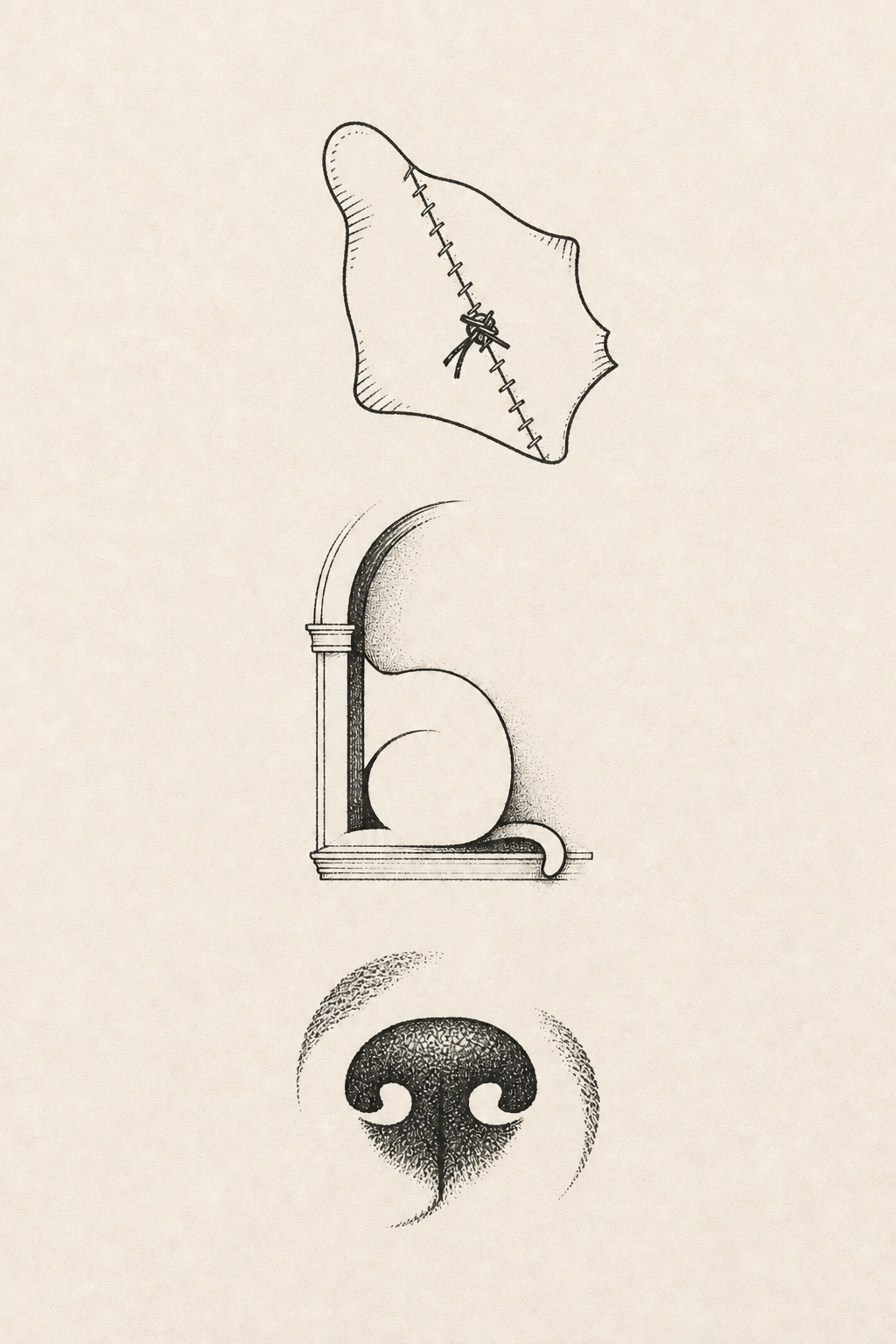
The favorite object is often more revealing than an animal symbol. A split tennis ball, cloth mouse, chewed rope, or stuffed toy with one repaired seam can carry a pet's habits without showing the pet directly.
Keep the damage. The missing corner, loose thread, or crooked repair is what separates the object from a stock illustration. An artist could use one darker anchor shape, a medium outer contour, and only enough interior detail to identify the wear.
The result can remember playfulness, stubbornness, or the private comedy of living with that animal. It feels affectionate without needing sentimental imagery on the surface.
The outer calf or upper arm gives an object-shaped motif enough room for an uneven silhouette. Very small placements may erase the damaged detail that makes the toy personal. Bring the real object if you still have it, or collect photographs from more than one angle.
5. The sleeping place
Think about where your pet settled when the house became quiet. A cat may have curled into the shape of a window corner. A dog may have rested against one particular doorway, chair leg, or patch of light.
The tattoo does not need a sleeping animal inside a complete room. An artist could combine a simple architectural boundary with one curved posture line. The animal appears through negative space, as if the room remembers the shape.
The room supplies the meaning. A window edge or doorway may look architectural to everyone else while still recalling the calm of sharing that particular home.
The shoulder blade has enough flat area for a window or doorway shape with open space around it. The side rib can suit a longer sleeping curve. Use a photograph of the actual location and mark the edge that matters most.
6. The nose pattern
A nose is recognizable at close range, but it needs careful editing to become a tattoo. Start with a direct, well-lit photograph that shows the outline, nostril shape, and a few larger texture divisions. Do not try to preserve every tiny mark.
The artist may build the design around a dark nose silhouette, then open selected areas with restrained texture. A thin circular or oval boundary can refer to the moment of leaning close without turning the motif into a portrait medallion.
Recognition is immediate here. The design becomes convincing when one asymmetry remains visible rather than turning the nose into a perfectly balanced icon.
The upper arm or outer thigh offers enough space for texture and contrast. If you want a very small tattoo, ask the artist whether the nose should become a simpler silhouette. A low-resolution social photograph may not provide reliable detail, so use the clearest original image available.

7. The garden they returned to
Pair one botanical source with one physical detail from the pet. This might be a rosemary stem from the path where a dog waited, the houseplant a cat slept beneath, or a seed head from the yard they patrolled.
The plant should not decorate a generic paw print. Let the two sources change each other. A stem might bend into an ear contour. A leaf gap might form a tail curve. One blossom could sit where a tag ring would normally close.
This tattoo can remember a place as clearly as an animal. It works when the plant is real and tied to something repeated, not chosen afterward because the flower looks attractive.
The back of the arm suits a vertical stem with a hidden pet contour. The shoulder gives a branching shape room to widen. Bring your own photographs of the plant in its ordinary state, not only a polished botanical illustration.
8. The quiet tag
A tag can identify a pet without showing a name, date, or phone number. Use its actual silhouette, a scratch pattern, the hole worn by the ring, or one mark from the reverse side.
An artist could simplify the tag into a small solid anchor and cut a private shape into it with negative space. That shape might come from an initial, a favorite place, or the pet's unusual patch of fur. The result reads as an object, but the most personal information stays yours.
The worn ring and scratches carry identity without exposing a name. They can also recall a sound that once moved through the house before the animal entered the room.
The inner forearm allows the tag and ring to sit as a compact vertical piece. The ankle can work for a reduced silhouette with very little interior detail. Trace the tag at actual size and photograph both sides before deciding what to keep.
9. Two lives under one roof
When the memorial involves two pets, avoid making two matching icons unless the animals truly felt alike. Give each one a different trace: an ear line and a whisker arc, two distinct sleeping curves, or separate route bends.
Join them with one shared source from the home. It might be the window line, garden gate, rug edge, or doorway both animals used. The composition should show a relationship without erasing the differences between them.
The shared boundary remembers the household while the separate traces keep each animal distinct. A dog and a cat do not need matching portraits, matching icons, or matching personalities to belong in one composition.
The shoulder blade can support two traces with a wider shared boundary. A vertical forearm version can stack the traces along one architectural line. Label every reference photograph so the artist knows which detail belongs to which animal.
How to choose a placement for a small pet memorial tattoo
Start with the shape of the composition, then consider visibility. A long route, stem, or ear contour usually reads better along the forearm, back of the arm, or side rib. A compact tag, toy, or nose study needs an area that can hold a clear silhouette without squeezing the interior detail.
Curved designs can use the shoulder or shoulder blade. Narrow horizontal designs may suit the collarbone, but the artist should adjust them for the natural slope instead of placing a straight graphic across the body.
Print a rough version at two or three sizes. View it from normal conversation distance. If the personal detail disappears, the answer may be a larger tattoo or a simpler drawing.
Build the artist brief from personal evidence
A useful brief does not require a polished design. Bring:
- a short note about the memory or routine you want the tattoo to recall
- three to five original photographs of the pet or object
- one detail that must remain recognizable
- one detail the artist may remove
- two possible placements
- a rough size range
- examples labeled for line weight, spacing, or movement rather than for copying
Ask the artist what they would simplify and how the design should turn with the body. The strongest final piece may look different from the first sketch while keeping the source that matters.
Pet memorial tattoo questions
Does a pet memorial tattoo need the pet's name or dates?
No. A physical detail, object, route, or place can identify the relationship without visible text. If privacy matters, keep names and exact dates in your written brief rather than on the skin.
Are paw prints always too generic?
Not when the print comes from your pet and the shape is usable. A generic paw icon says very little about one animal. An actual print can be personal, but an artist may still need to clean or simplify it for the chosen scale.
Can a small tattoo include a realistic portrait?
Small scale limits how much information remains readable. If the face, expression, or fur pattern is essential, compare artists whose portfolios show relevant work and ask what size the portrait needs. Do not choose the final measurement before that conversation.
What if I only have imperfect photographs?
Use several images and look for a repeated feature rather than asking one blurred photograph to support a full portrait. An ear position, tail curve, collar, or favorite object may give the artist better evidence.
Keep the reference personal and the drawing flexible
Choose one direction, then gather the real material behind it. A worn collar, one route bend, or the edge of a familiar window may be enough. Your artist can decide how much line, texture, and space the final tattoo needs.
The goal is not to arrive with a finished tattoo copied from someone else's skin. It is to arrive with a clear memory, useful visual evidence, and room for an artist to draw.