
A small Japanese tattoo idea needs more research than finding a familiar motif and reducing it. Koi, waves, peonies, chrysanthemums, maple leaves, masks, animals, and other subjects carry histories, visual conventions, and relationships that a short social caption may not explain.
Begin with the artist and the context. A practitioner experienced in Japanese tattooing can tell you which subjects suit the scale, what can be separated from a larger composition, and where your idea needs a more careful source.
Choose one motif with enough room
A compact subject should have a recognizable posture and silhouette. A single wave crest, maple leaf, peony, chrysanthemum, mask, lucky object, or simplified animal detail may fit small scale more naturally than a complete scene with several background systems.
Ask what part of the motif matters to you. If a koi represents a family story, perhaps the direction, color, or water connection is essential. If you mainly love the movement of waves, the artist may suggest an approach that does not need a second subject.
Research meaning without claiming one fixed answer
Meanings can vary with folklore, religion, season, region, pairings, and the way a subject is shown. Avoid turning a complex motif into a one-line promise such as luck, strength, or protection. Read museum, cultural, historical, and artist sources when possible.
Be careful with sacred, protective, criminal, military, or identity-linked imagery. If the context is unclear, say so and keep researching. An experienced artist may recommend a different subject, and that advice is part of planning respectfully.
Start with the animal, then study its visual context
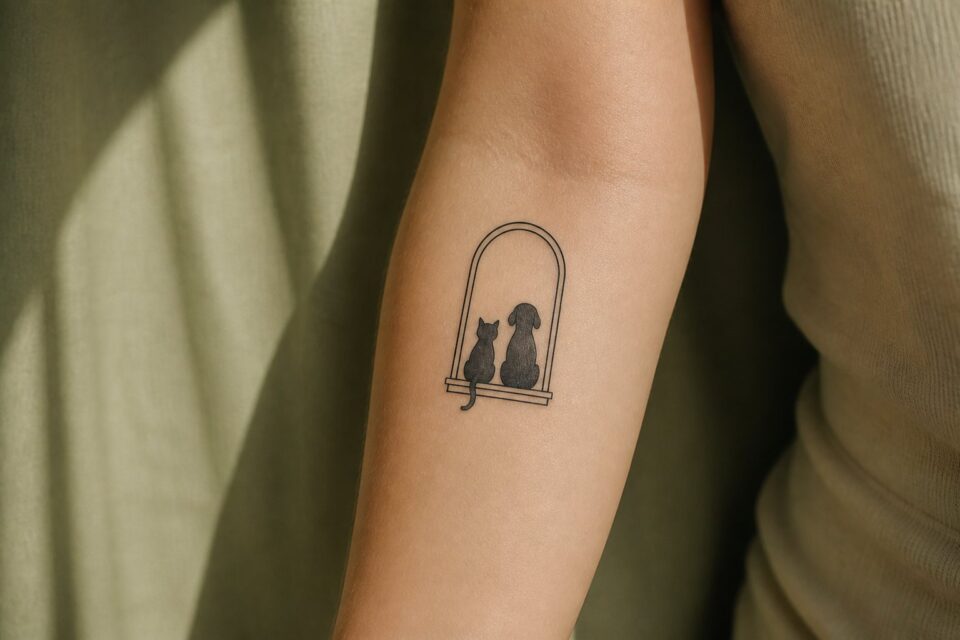
If the subject is a Shiba, cat, rabbit, or another companion animal, begin with your own photographs and the feature that identifies that animal. Then research how animals, maple leaves, waves, clouds, and seasonal plants appear in the Japanese art references you are using. Do not place an unrelated motif beside the pet only to make the tattoo look Japanese. Ask an experienced artist how much context belongs in a small piece.
Understand what small scale changes
Large Japanese tattoo compositions often connect main subjects with wind, water, cloud, rock, and seasonal elements across the body. A small standalone tattoo cannot reproduce that whole system. It needs to work as a compact piece, not a miniature back or sleeve.
The artist may simplify a background, isolate one element, or choose a bold crop. Letting go of a full scene can protect the motif’s movement and clarity. Compare true-size sketches instead of judging detail on an enlarged phone screen.
Find an artist with sustained experience
Look beyond one Japanese-inspired post. Review a body of work, healed examples, drawing choices, subject knowledge, and the way the artist describes their practice. If they work in a specific tradition, read the information they provide before asking for changes.
Bring your personal reason, preferred area, and reliable references. Avoid assembling the head from one tattoo, waves from another, and flowers from a third. That approach copies artists and ignores the composition that made each original work.
Keep the pet reference and the art reference separate
Make one folder for the animal and another for the Japanese visual material. The pet folder should contain your photographs, notes about posture and markings, and the feature that must survive simplification. The art folder should contain museum or book references with the maker, date, subject, and reason you saved each image. Do not mix both folders into one collage.
During the consultation, explain the animal first. Then show the visual relationships you are considering, such as a maple leaf behind the shoulder, a wave curve that supports movement, or a seasonal plant that belongs to the memory. Ask the artist which combinations are coherent within her practice. Remove any motif that is present only because it appeared often in search results.
Keep the final source list after the tattoo is finished. It will remind you which choices came from the pet, which came from historical research, and which came from the artist’s interpretation. That record is more useful than attaching one fixed meaning to every element.
Keep source notes with the idea
Save the title, maker, date, collection, or publication details for useful museum and historical references. A screenshot without context is easy to misread later. Brief notes also help you separate a traditional source from a modern artist’s interpretation of it.
When two sources disagree about a motif, do not hide the uncertainty. Bring the question to the artist and keep researching. A neat one-word meaning is less valuable than understanding that a subject changes with posture, season, pairing, and the tradition in which it is drawn.
Keep personal and research notes separate. One page can explain what the motif means in your life, while another records what reliable sources say. This prevents your private association from being presented as a universal cultural meaning and gives the consultation a clearer starting point.
If the artist recommends a different motif or more size, ask what problem the change solves. The answer may involve readability, a traditional pairing, the movement of the subject, or the limits of separating one element from a larger system. That explanation is part of the value of choosing experience.
Where to research the imagery
Start with museum collections rather than symbol lists copied from shop to shop. The Museum of Fine Arts, Boston’s introduction to tattoos in Japanese prints is a useful doorway into the relationship between nineteenth-century prints and pictorial tattooing. The Tokyo National Museum’s ukiyo-e collection page offers another path into the visual language behind many familiar compositions.
Save the name of the work, artist, character, or story with every image you collect. That small habit makes it easier to ask better questions and harder to detach a motif from its context. If a reference has been reposted without a title or source, use an image search to locate the museum, book, or artist page before treating it as research.
Bring that context to the tattooer as background, not as an instruction to copy a historical print line for line. A specialist can explain how a scene may need to be rearranged for the body, what details identify the subject, and whether your proposed combination makes sense.
Research the subject before building a mood board
Japanese tattooing includes long histories, regional practices, iconography, visual conventions, and living artist lineages. Begin with the specific subject and context rather than a folder labelled “Japanese aesthetic.” Museum collections, scholarly publications, and experienced practitioners can help distinguish a named figure, plant, animal, garment, story, or seasonal pairing.
Record where every claim comes from. Search summaries often repeat symbolic meanings without evidence. If you cannot verify a rule, do not present it to an artist as fixed tradition.
Understand why scale and body coverage matter
Many Japanese compositions use the body as a field, with major subjects, backgrounds, borders, and direction working together. Reducing a complex back or sleeve arrangement into a tiny isolated collage may remove the relationships that made it coherent.
This does not mean every related tattoo must be full-body. It means you should ask an experienced artist what survives at the scale and whether a single subject, flower, or object should stand alone rather than mimicking a miniature suit.
Plan subject and background as one system
Water, clouds, wind, rocks, and other background forms can create movement, season, setting, and transitions. They are not generic filler. A background choice should support the subject and body direction, not be pasted around separate images at the end.
Ask about pairings instead of assembling symbols yourself
Plants, animals, figures, weather, and seasons may carry conventional or narrative relationships. Bring the story and research, then let a knowledgeable artist advise on pairings. Avoid mixing every image you like into one composition without understanding how they interact.
Read the body from a distance
For sleeves, backs, chest panels, or legs, photograph all sides in neutral posture. Major focal areas should remain clear from normal viewing distance. Background movement can guide the eye around limbs and across joints, while borders define coverage.
Existing tattoos, scars, and future plans belong in the first consultation. The artist may recommend changing subject, scale, or placement to preserve composition. Treat that advice as part of the design rather than an obstacle.
Choose through demonstrated knowledge and work
Study complete healed projects, not only cropped motifs. Read how the artist describes their practice, training, influences, and terminology. Ask respectful questions without demanding a personal cultural credential as a performance. The point is to find someone who can explain their decisions and whose work shows sustained understanding.
Do not ask one artist to reproduce another practitioner’s back piece, sleeve, or drawing. Even within established conventions, composition and drawing carry authorship.
Handle language and named imagery carefully
If text is involved, verify it with a qualified reader and discuss calligraphy rather than selecting decorative characters online. For religious figures, folklore, family crests, or culturally specific emblems, learn their context and whether your proposed use is appropriate.
Respectful research is not a way to collect permission tokens. It may lead you to change the subject, approach a different artist, or recognise that the visual idea should remain an influence rather than a direct claim.
Prepare a project brief without pre-composing the tattoo
Include personal intention, researched subject, reliable sources, preferred coverage, existing tattoos, colour direction, and firm boundaries. Add relevant complete work from the chosen artist’s portfolio. Leave background system, exact pairings, and body flow open to their expertise.
The strongest project will not be the one with the most recognisable symbols. It will be the one in which subject, scale, background, season, and body have been considered together with enough respect to keep learning during the process.
Keep research notes distinct from tattoo instructions
Create one document for history, terminology, sources, and unanswered context questions. Create another shorter document for your personal intention, body coverage, and visual preferences. Share both when useful, but do not convert every historical fact into an element the artist must include.
This separation makes uncertainty visible. It also gives a knowledgeable artist room to correct a pairing or recommend a different scale without appearing to reject your story. Research should improve the conversation, not turn the client into a director of a tradition learned through a few search results.
Add a section titled “questions for the artist” rather than filling gaps with guesses. Ask how the proposed subject relates to season, background, direction, and coverage in their practice. Record the answer and the sources they recommend.
Be willing to return to the research after the consultation. Respect is not a box checked before booking; it includes changing course when better information complicates the first idea.