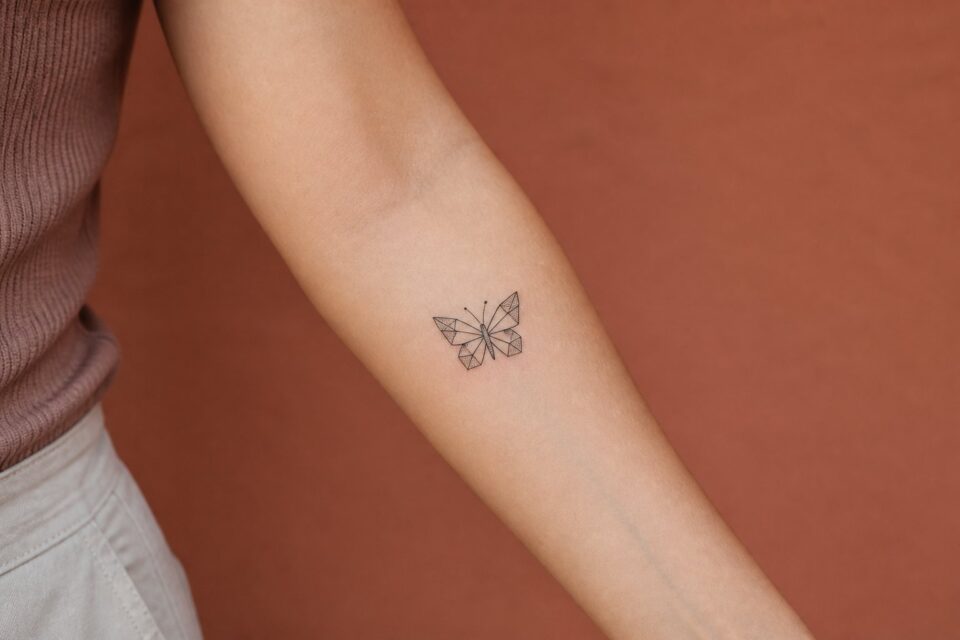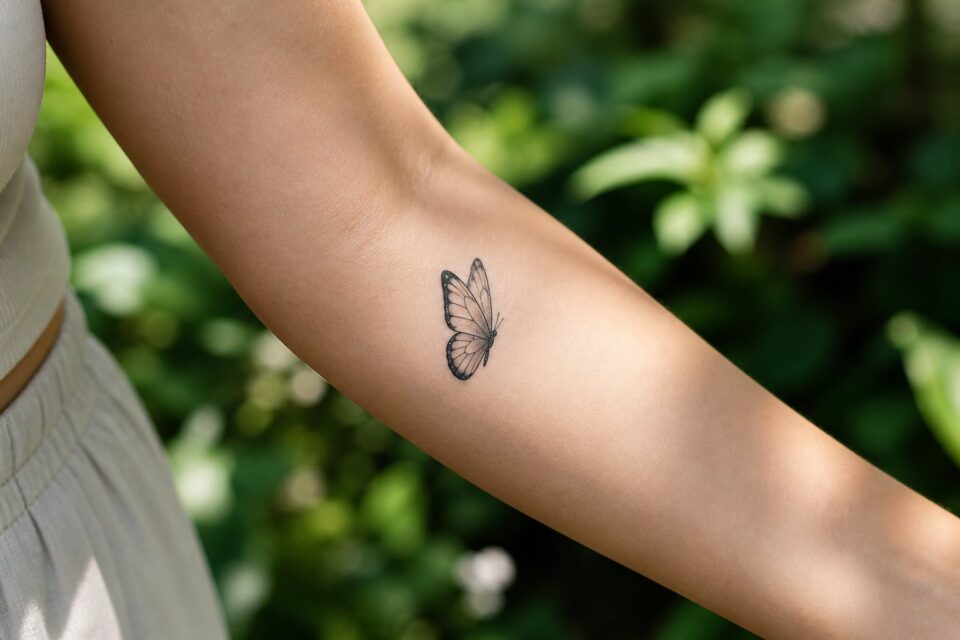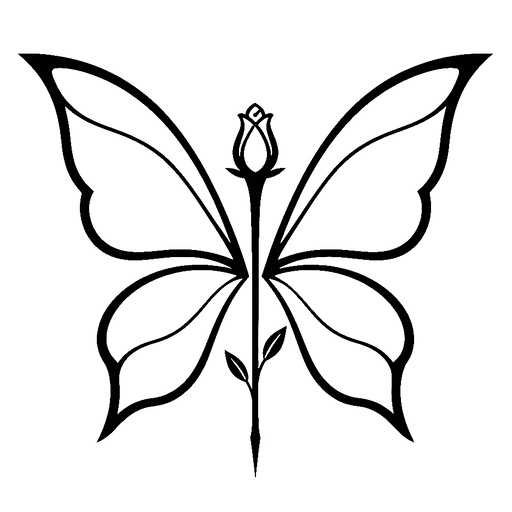
A butterfly can mean change, but that answer is too broad to guide a drawing. Change from what? What deserves to stay visible? Is the tattoo about a finished chapter, a difficult middle, or the space that opened afterward?
Those questions matter more than a list of symbols. A useful butterfly tattoo brief gives the artist something they can draw: a source image, a posture, a structural detail, a direction of movement and enough open space for the chosen size.
The nine studies below are original planning directions. They are not tattoo-ready stencils. Use them to identify the part of your story that belongs in the wings, then ask your tattoo artist to redraw the composition for your body and their line language.

Start with one decision: what should the butterfly carry?
Sort your references into three groups before you collect tattoo images:
- Memory: a detail, place or object you want to keep.
- Change: the break, turn or threshold that altered the story.
- Next: the space, direction or unfinished form that points forward.
You may have material for all three. The tattoo does not need to show all of it. Choose one primary group and let a second appear quietly in the structure. That keeps the butterfly from becoming a collage of unrelated symbols.
Memory directions
Memory becomes more specific when it comes from evidence. A repaired sleeve, the vein of a plant from a family garden or the curve of a ribbon can influence the wing without appearing as a separate icon.
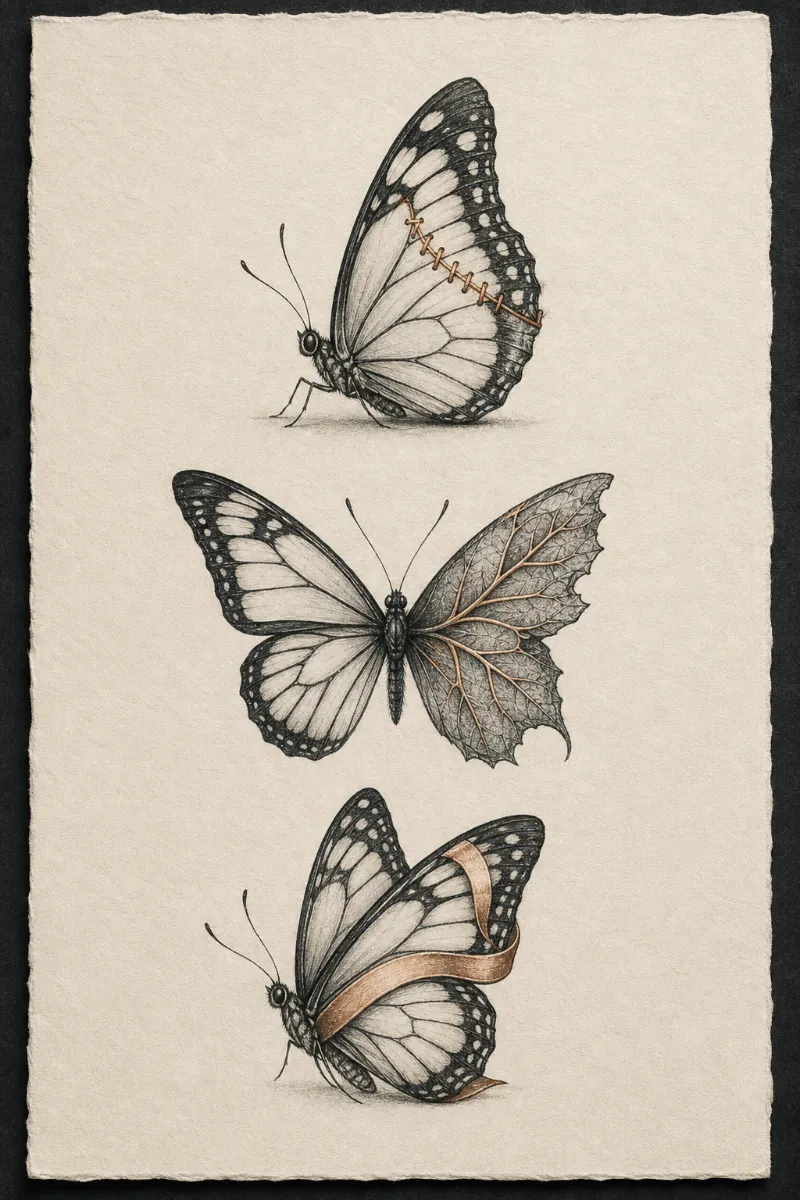
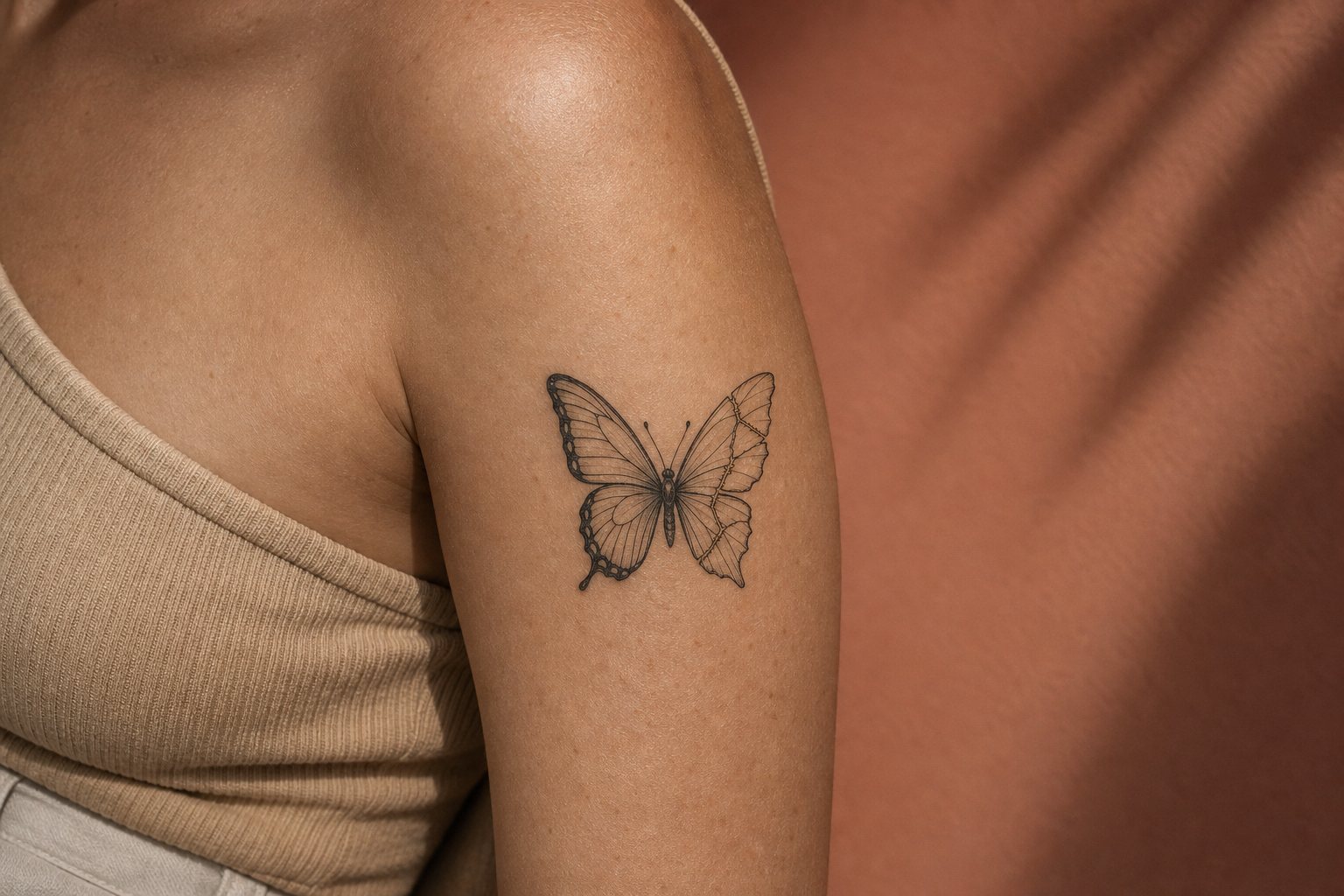
1. The mended edge
One wing carries a short repaired seam based on a real stitch pattern. The seam should follow the wing structure rather than cut across it at random. It can recall repair, care or survival, but the association belongs to the wearer.
This direction works best when the rest of the butterfly stays quiet. Too many tears, stitches and fragments turn one personal detail into a costume. Bring the artist a close photograph of the actual repair and say which part of its rhythm matters.
2. The garden vein
One wing borrows the branching logic of a leaf from a real place. The leaf does not need to remain visible as a leaf. Its main vein can become the wing anchor while smaller branches replace part of the usual cell pattern.
Use one plant reference, not a bouquet of Pinterest flowers. A photograph from the garden, trail or home connected to the memory gives the artist a usable structure and keeps the botanical detail personal.
3. The keepsake band
A single band crosses a partly folded butterfly in the curve of a ribbon, garment edge or other soft keepsake. The band should affect how the wing folds. It should not look pasted over the insect.
This can suit a private reference because only the wearer needs to know where the curve came from. Bring one full photograph for context and one close crop showing the line, weave or edge you want the artist to study.
Change directions
Change does not always need a caterpillar, chrysalis and adult butterfly in a literal sequence. Posture, direction and a shift in visual weight can carry the idea with less clutter.

4. The turning route
The butterfly turns rather than flying straight upward. Its body angle and unequal wings create the bend, while one short route line confirms the motion.
Decide what the turn means before choosing its direction. It may mark leaving, returning, changing course or refusing the expected path. On the body, the turn can follow a collarbone, wrap slightly around a forearm or rise along the ribs.
5. The threshold shell
One open contour beside a partly emerged butterfly suggests the former casing. It is quieter than a full life-cycle diagram and leaves more room around the wings.
Use this when the difficult middle matters as much as the finished change. Keep the casing secondary. If it becomes as dark or detailed as the butterfly, the image splits into two competing subjects.
6. The shifted weight
One side begins with a darker anchor and opens into lighter structure across the butterfly. The change is visible in the distribution of ink, not in an extra symbol.
This direction needs careful balance. The dark side should still contain open skin, and the light side needs enough structure to remain legible. Ask the artist to test the design as a silhouette before adding texture.
What comes next
A forward-looking tattoo does not have to show a destination. An opening, an unfinished edge or a path into blank space can leave the next chapter deliberately unresolved.

7. The open doorway
A doorway-shaped gap sits inside one lower wing. It reads first as negative space and only then as an architectural reference.
The opening can come from a real doorway, window or threshold, but avoid turning the wing into a miniature building. One curve or proportion is enough. The butterfly must still read from normal viewing distance.
8. The unfinished fold
A side-view butterfly holds one wing close and leaves part of the outer edge open. A route line turns into blank paper rather than ending in an arrow.
This direction can suit a story that is still in progress. The open edge should be intentional and supported by the remaining wing structure. Otherwise it may look like an incomplete drawing rather than a chosen pause.
9. The widening windows
Wing cells become progressively larger and more open toward one edge. The last contour stops cleanly before closing the form.
This works when the idea is less about escape and more about making room. Keep the number of windows low. Several strong openings will survive at small scale better than a lace of tiny cells.
Protect the silhouette before the wing decoration
Small butterfly tattoos often fail on paper before they fail on skin. The outer wing shape, body angle and one or two bands carry recognition. Tiny veins, dots and miniature references are the first details to compete.
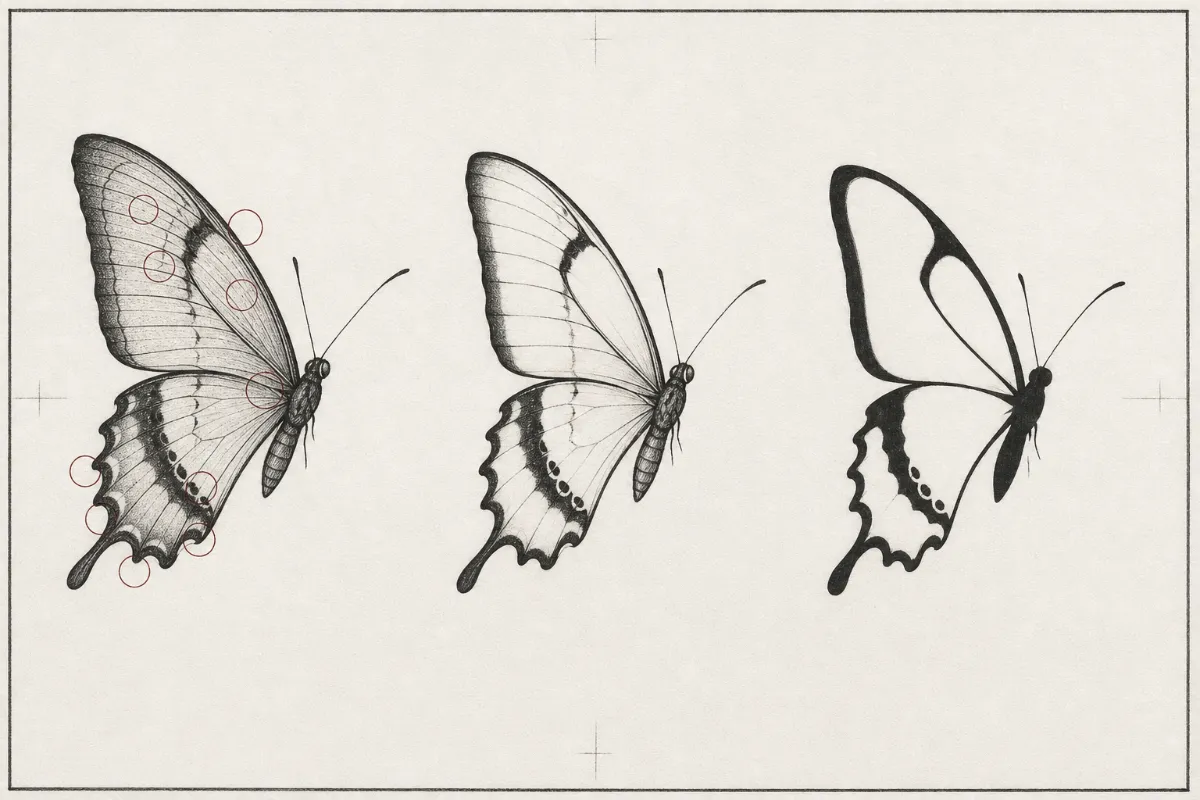
Ask for three versions during planning:
- the full reference drawing
- the artist’s tattoo drawing at the intended scale
- a silhouette or thumbnail test viewed from normal conversation distance
If the plain silhouette feels generic, extra detail will not rescue it. Change the wing proportion, posture or body angle first. If the silhouette works, decide which private mark deserves to remain inside it.
Match the composition to the body flow
Placement changes the butterfly. A wide open-wing version may suit an area with a gentle horizontal arc. A narrow side view can follow a forearm. A turning composition can move with the ribs instead of sitting like a flat badge.
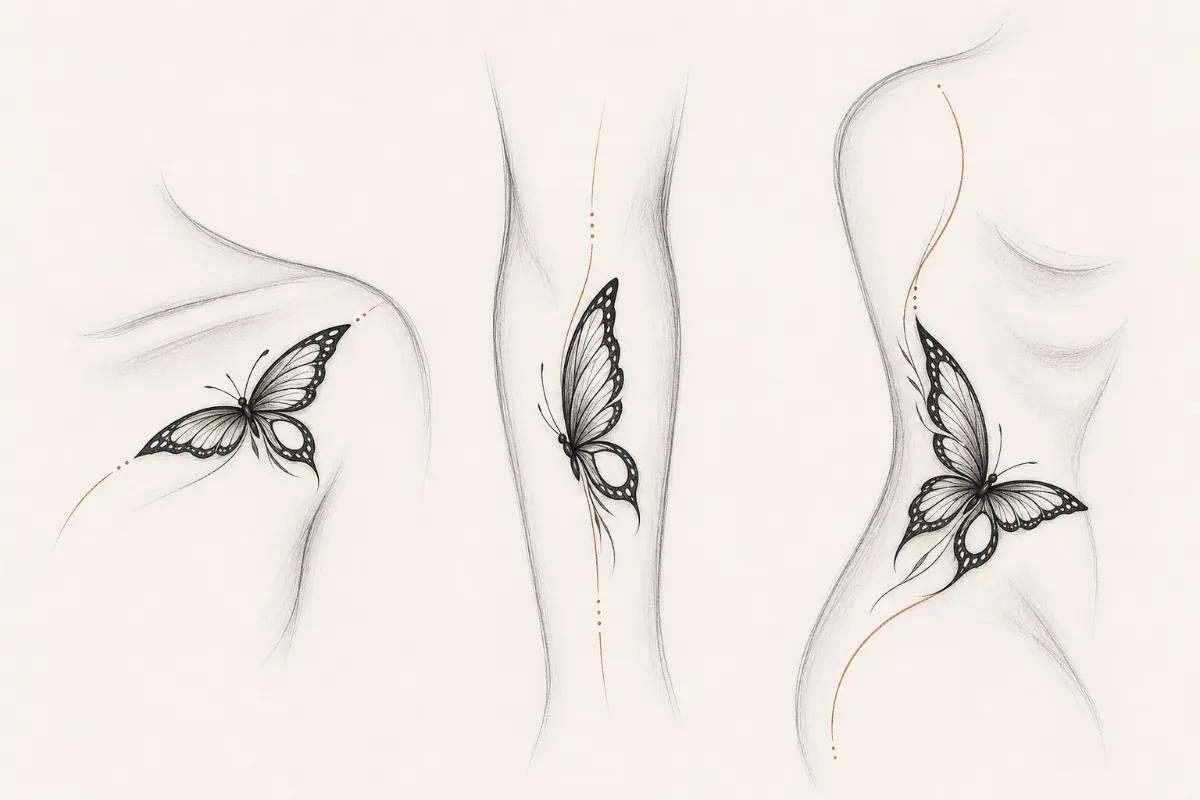
For the collarbone, compare a compact diagonal butterfly with a perfectly level one. The diagonal usually gives the wings room to respond to the slope. For the inner forearm, a partly folded or narrow butterfly can use the length without filling the full width. Along the ribs, a turning route or uneven wing span can follow the torso’s curve.
Do not select a final size from an isolated image. Print two or three versions, photograph them against the placement and ask the artist what must change for their drawing and your anatomy.
Build a one-page butterfly tattoo brief
The brief should make the source clear without telling the artist how to copy another tattoo. Include:
- One sentence naming the memory, change or next chapter.
- One butterfly species or silhouette reference, if accuracy matters.
- One personal source image, such as a repair, plant, ribbon, doorway or route.
- The posture: resting, turning, emerging, open or partly folded.
- The fixed feature that must survive simplification.
- The detail the artist may remove first.
- Two possible placements and a rough size range to test.
- Examples from the chosen artist’s own portfolio, labeled for line weight, spacing or movement.
Butterfly tattoo questions
Does a butterfly tattoo always mean transformation?
No. Transformation is a common personal association, but it is not a compulsory or universal reading. A butterfly can connect to a person, place, species, season or private event. State your own association plainly instead of borrowing authority from an unsourced meaning list.
How do I make a butterfly tattoo less generic?
Change the construction, not just the decoration. Start with posture, wing proportion, body angle and one source-derived feature. A real seam, plant vein, route bend or architectural opening can shape the wing. Extra moons, flowers and tiny symbols usually make the idea less specific.
Can a small butterfly keep detailed wing markings?
That depends on the drawing, placement and artist. Choose the two or three markings that carry the species or personal reference. Ask to see the design printed at actual size and compare it with a simplified version.
Should I bring Pinterest tattoos to the consultation?
Use them to identify broad qualities such as line weight, scale or movement. Do not ask an artist to reproduce another artist’s butterfly. Bring insect references, your own personal evidence and examples from the artist’s portfolio instead.
Which placement works best for a butterfly tattoo?
Choose by shape before visibility. A wide butterfly needs a gentle open field. A side view or folded wing suits a narrow vertical area. A turning butterfly can follow a curve. The final placement and size should be tested with the artist’s stencil on your body.
Choose the detail that must remain
Pick one of the nine directions. Circle the part that makes it yours and cross out the detail you would remove first. That simple edit gives the artist a clearer starting point than a folder full of finished tattoos.
The wings are not the meaning by themselves. The source, structure and space you choose are what turn a familiar butterfly into a personal brief.