
Choosing a tattoo artist is not the same as choosing a picture. You are looking for a person whose repeated visual decisions, subject experience, communication, and working process fit the piece you want to make.
Define what kind of fit you need
Write a short description of the subject, desired mood, approximate placement, and amount of detail. Then identify the most important portfolio quality: delicate botanical line, bold reduction, lettering, small realism, geometric structure, or another specific direction.
A nearby artist with broad experience may not be the best fit for a highly specific style. At the same time, a strong style match does not mean every subject or placement fits that artist’s practice. Read their current booking information.
Look for the animal problem you actually have
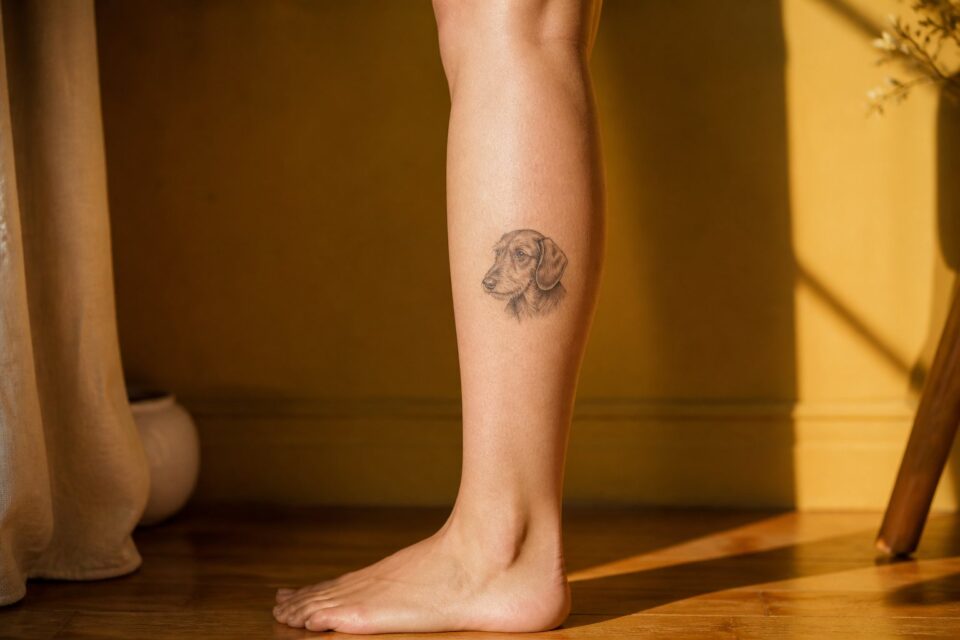
A portfolio full of cat portraits does not automatically answer a request for a tiny greyhound silhouette. Look for similar coats, ear shapes, viewing angles, and the amount of detail you want. Compare healed pieces shown at ordinary distance. If the idea is a tag, toy, or paw gesture rather than a portrait, find evidence that the artist can make small objects feel specific without adding decorative filler.
Read a portfolio as a body of work
Look for repetition, not one standout post
Find several pieces with similar line treatment, scale, complexity, or subject. Consistency shows what the artist chooses and controls repeatedly.
Separate subject from style
You may like the mood of a botanical tattoo but want a different subject. Name the quality,open spacing, uneven line, dense shading, graphic silhouette,instead of asking for the same composition.
Notice placement
Look for examples where the design responds to the body instead of floating as a small image. Comparable placement can show how the artist thinks about direction and negative space.
Review healed work when the artist provides it
Healed examples can add context to the portfolio, but do not use them to demand a guaranteed result. Bodies, placements, designs, and care circumstances differ.
Shortlist artists with written notes
Save three healed examples from each artist’s own portfolio and write why each one matters. One may show a short coat without muddy texture. Another may show a small face at ordinary distance. A third may show the placement you are considering. If you cannot explain the connection, remove the image from the shortlist.
Then compare the gaps. An artist may have excellent pet portraits but no small work, or strong silhouettes but no likeness-based pieces. A gap is not proof that the artist cannot do the work, but it gives you a precise question for the enquiry. Ask about the missing experience instead of sending a vague message asking whether they do pet tattoos.
Keep price, travel, booking process, and communication in the same notes. Visual fit matters, but so does understanding how references are submitted and when design feedback happens. Choose the process you can follow calmly.
Verify practical information through official channels
- Current booking status and preferred enquiry method
- Studio name and location
- Age or identification requirements
- Deposit, rescheduling, and cancellation terms
- Subjects or placements the artist does not accept
- Whether they offer consultations and how references are submitted
Use the artist’s website, verified profile, or studio listing. Be cautious with copied accounts, payment requests that conflict with published instructions, and portfolios that do not show a coherent body of work.
Write a concise first enquiry
Include the idea in two or three sentences, possible placement, approximate size range, relevant reference material, and why that artist’s work fits. Do not send dozens of unlabelled images or request an exact copy of another tattoo.
A useful line is: “I like the open spacing and organic line in your botanical work; I would like your interpretation of a plant connected with my family garden.” This identifies fit while preserving authorship.
Look for decisions, not just a matching style
A portfolio should show more than a row of images you like. Look closely at how the artist handles tight curves, small gaps, lettering, repeated lines, and the body areas you are considering. Two artists may both use fine lines but make very different decisions about spacing and contrast.
Save three examples from the same artist and write one sentence about each. Be specific: “the leaves stay open,” “the outline is stronger than the interior,” or “the design follows the wrist instead of sitting like a sticker.” Those notes help you explain what you admire without asking for another client’s tattoo to be copied.
Read the artist’s booking information before contacting them. Check which subjects they accept, how they handle deposits and revisions, and whether they show work beyond the immediate appointment photo. A good fit is someone whose actual process supports the kind of small tattoo you want, not simply the account with the largest audience.
Search for the design problem, not “best artist”
Start with subject, scale, treatment, and location. “Healed botanical blackwork on a shoulder in Vancouver” produces a more useful search than “best tattoo artist.” No artist is best at every visual problem. You are looking for repeated decisions that fit the piece you want.
Build a shortlist of three to five people. Save links to their official sites or studio pages and note why each belongs on the list. This makes comparison calmer and reduces the pull of one viral image.
Read each portfolio in four passes
First: subject
Do they repeatedly tattoo the thing you want, or only a neighbouring style? An artist may make beautiful flowers but rarely work with lettering, portraits, geometry, or cover-ups.
Second: scale and placement
Find examples close to your intended size and body area. Large back pieces do not reveal how someone edits for a small wrist. Tiny symbols do not show how they organise a sleeve.
Third: healed work
Look for photographs labelled healed and note how long after the appointment they were taken when stated. Fresh work is useful for design and placement; healed work supplies another kind of evidence about the artist’s portfolio.
Fourth: consistency
One exceptional post may be a collaboration, unusual commission, or older direction. The last twenty relevant pieces reveal what the artist chooses repeatedly now.
Verify identity and booking channels
Use links from the artist’s official profile or studio site. Impersonation and copied portfolios can appear on social platforms. Check that the name, studio, city, and booking method agree across sources. Be cautious if payment is requested through an account not connected to the published studio information.
Read the studio’s booking instructions before sending a message. Some use forms, others email, and some open books during limited periods. Following the stated route is part of assessing communication, not a test of enthusiasm.
Read policies before paying a deposit
Look for deposit terms, rescheduling rules, age and identification requirements, guest policy, design-review process, accepted payment methods, and accessibility information. If something important is missing, ask in writing. Keep confirmations and receipts.
A deposit commonly reserves time and drawing work, but exact terms vary. Do not rely on advice from another studio or a social comment. The policy you agree to should be the one supplied by the artist or studio handling your appointment.
Ask practical safety questions without pretending to inspect clinically
Local regulation differs. Use your municipal, regional, state, or provincial health authority to learn what studios must provide where you live. Ask the studio about its procedures and whether it can explain them clearly. If you have a medical concern, speak with a qualified healthcare professional.
General tattoo risks include infection, reactions, and scarring; the FDA tattoo fact sheet is a useful starting point, while local authorities govern tattoo practice in their jurisdictions.
Notice how the artist handles fit
A thoughtful reply may recommend more scale, another placement, fewer details, a colleague, or no appointment. Agreement with every request is not the only sign of good service. Clear reasoning and respect for your boundaries matter.
Pay attention to whether questions are answered without contempt, whether the artist credits source material, and whether you feel pressured to book quickly. Popularity does not cancel the need for clear consent and communication.
Keep a simple research record
- Official name, studio, city, and booking link.
- Three relevant healed portfolio examples.
- Subjects and scales they repeat.
- Policy page and deposit terms.
- Questions still unanswered.
- Your reason for choosing or declining.
The record is not a scorecard to rank artists publicly. It is a private tool for making one booking decision. Choose the person whose current work, process, and communication fit your design, then approach them with a concise brief rather than a request to reproduce the image that first caught your attention.
Give the search a stop rule
End the search when one artist meets the essential criteria, answers the open questions, and has a process you can accept. Endless comparison can turn small differences in follower count or photography into false evidence. Return to the design problem you wrote at the beginning.
If nobody on the shortlist fits, change one variable at a time: widen the travel radius, wait for books to open, reconsider scale, or seek a referral. Do not relax identity checks, source ethics, or basic communication simply to book quickly. A pause is a valid research result.
Revisit the shortlist when portfolios or studio arrangements change. Save the date of your research rather than assuming every price, location, booking method, or stylistic focus will remain current. Verify details on the official channel immediately before sending money.
Delete rejected artists only if you recorded the reason. “Beautiful work, no healed lettering at this scale” may become useful for another project, while “payment identity could not be verified” is a reason not to return without new evidence. The notes protect decisions from mood and memory.
Ask friends for artist names, not final verdicts. Their appointment can reveal a lead, but your subject, body area, communication needs, and risk tolerance may differ. Verify every recommendation through the artist’s current official portfolio and policies before it enters the shortlist.