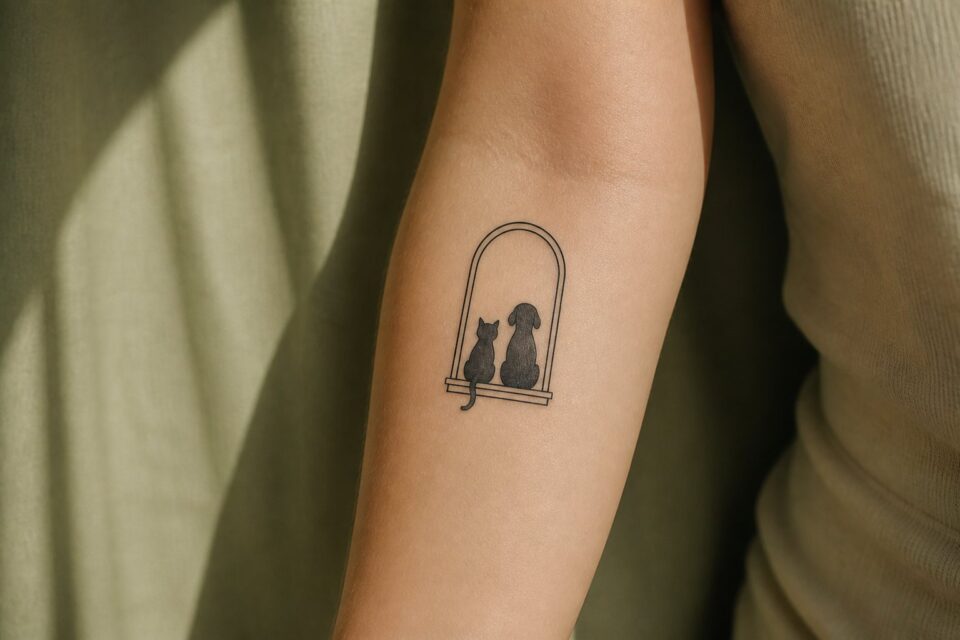

Small tattoo flash and custom designs can both lead to personal work. The better choice depends on what you already know, how much change the idea needs, and the way the artist offers their work.
Flash is not automatically generic, and custom does not mean you control every line. In both cases, the tattoo is strongest when you choose an artist whose drawing style already fits what you want.
What small tattoo flash usually means
Flash is a design the artist has drawn before a client books it. It may be repeatable, available once, offered at a fixed size, or open to small changes. The artist should explain the terms, so ask instead of relying on a rule you saw elsewhere.
Flash works well when a design already feels right without a personal rewrite. It also gives you a direct example of the artist’s taste and editing. For a first tattoo, seeing the complete idea can make the booking decision simpler.
Decide whether likeness is part of the promise
Pet flash can work when you love the artist’s dachshund, cat, rabbit, tag, or toy design as it is. Custom work makes more sense when the tattoo must preserve a specific ear angle, marking, posture, or object from your animal. Ask how much a flash design may change before it becomes custom. Neither process is more personal by default. The source of the meaning and the studio’s drawing policy decide the fit.
When a custom design makes more sense
Custom work is useful when the subject comes from your own source: a family object, pet detail, handwriting sample, plant, place, or private symbol. You bring the meaning and useful references, then the artist interprets them in the style you chose them for.
A custom request still needs editing at small scale. Give the artist a clear priority instead of a long list of required icons. One specific object with the right posture, mark, or proportion often holds more personal information than five separate symbols.
Ask what can change
Some flash can change color or placement but not the drawing. Other designs may be adjusted for the body or offered only as shown. Ask before booking if a detail is a deal breaker. Do not wait until the appointment to turn a flash choice into a different custom concept.
For custom work, avoid sending another artist’s finished tattoo as the blueprint. Use original objects, photographs, public-domain references, or a small group of images labelled for mood, shape, or color. Explain what each reference contributes.
Choose the process that feels comfortable
Read the booking information carefully. Check deposits, drawing review, size limits, placement restrictions, and whether the artist accepts changes. A clear process matters more than using the flash or custom label in a particular way.
If you are undecided, compare one flash design you would happily wear unchanged with one personal subject that needs interpretation. The answer often becomes obvious when you ask which choice you are excited about, not which sounds more special.
Compare the real decisions, not just the labels
Write down the placement, approximate size, budget questions, timing, and amount of change you expect. Then compare how the flash and custom options handle those needs. A ready design can still involve placement choices, while a custom request can still have firm artist boundaries.
Check whether seeing the drawing early is important to you. Some artists review custom work close to the appointment, while flash is already visible. Neither approach is automatically better, but the process should feel understandable before you send a deposit.
Keep a copy of the booking description and your original enquiry. Clear notes prevent last-minute confusion about color, size, repeat status, or permitted changes. If the artist’s answer does not fit what you need, it is fine to keep looking without trying to change their process.
Also compare the emotional part of the choice. You may love a flash drawing immediately, while a custom idea matters because of the source behind it. One is not more meaningful by default. Choose the route that you would still want if nobody else knew how the tattoo began.
If you like a flash design but need one essential change, ask once and accept the answer. If the change would alter the subject, composition, or reason the drawing works, treat that as a new custom enquiry instead of negotiating the original flash into something it was not.
Separate design origin, repeatability, and adaptation
Flash means a design offered by an artist, often on a sheet or in a collection. Some flash is repeatable; some is claimed once. Custom work is developed for a client’s brief. Either may allow limited adaptation, but the artist’s stated policy controls. Ask rather than assuming that “flash” means identical forever or “custom” means no related imagery will ever exist.
Placement and scale adjustments do not necessarily turn flash into a custom commission. Colour changes or added elements may be allowed, discouraged, or priced differently. Clarify before booking.
Choose flash when the artist’s finished idea is the attraction
Flash can be ideal when you love the whole drawing, trust the artist’s style, and do not need a private story built into every line. It often shows the artist working freely in subjects they enjoy. The decision can still be thoughtful and personal because you choose the design, body relationship, and moment.
Read the post or booking page for size, placement, colour, repeat policy, and claim procedure. Save the official link rather than relying on a reposted screenshot.
Choose custom when source material must shape the design
A memorial document, particular pet, family object, exact plant, body-specific composition, cover-up, or multi-element story often needs a custom process. Bring the source and priorities, not a finished tattoo to reproduce. Custom does not mean directing every line.
Expect the artist to edit, recommend scale, alter composition, or decline parts that do not fit their work. You are commissioning their authorship as well as their application.
Understand the middle ground
Artists may offer predrawn concepts customised to placement, repeatable motifs with different details, ornamental elements composed on the body, or “wanna-do” pieces adjusted within limits. These categories are useful because many bookings do not fit a strict binary.
Ask what remains exclusive
If exclusivity matters, define it. Does it apply to the exact drawing, the motif, the colour version, or the composition? An artist cannot reasonably promise never to tattoo a rose, butterfly, or dagger again, but may have a clear one-off policy for a particular design.
Buy flash from the artist who created or legitimately offers it
A design reposted on an inspiration account is not free flash. Locate the original artist and booking terms. Do not take a claimed design to someone else for a cheaper copy. If geography prevents booking, ask the creator whether a tattoo ticket, licensed design, or other arrangement exists; accept the answer if it does not.
Likewise, do not call a copied Pinterest tattoo “custom” because one leaf was changed. Custom work begins from your story, subject sources, and the new artist’s composition.
Compare process, not assumptions about price
Flash may involve less client-specific drawing, but price still reflects size, placement, colour, time, artist, and studio. Custom work may require consultation and design time. Ask for the relevant rate or estimate, deposit, redraw policy, and booking steps.
Do not choose flash only because you expect it to be cheap or custom only because it sounds more valuable. The better route is the one that matches how much of the image already exists and how much personal material the artist must solve.
Use one final decision test
If the exact drawing disappeared from the artist’s available page tonight, would you want them to invent something from your source, or was that drawing itself the reason for booking? The first answer points toward custom; the second points toward flash.
Whichever process you choose, confirm authorship, terms, placement, scale, and adaptation in writing. A flash tattoo can become deeply personal through living with it, and a custom tattoo can remain visually simple. Value does not depend on how complicated the ordering story sounds.
Keep the two reference folders different
For flash, save the artist’s original listing, availability status, permitted options, and official booking link. The drawing is already the reference. For custom work, collect personal sources and visual qualities while excluding any finished tattoo you would be tempted to reproduce.
This small organisational difference prevents confusion during enquiry. It shows whether you are asking to claim an existing work or commission a new one, and it keeps source credit attached. The artist can respond quickly because the requested process is clear from the first message.
Before sending, add a plain subject line such as “Flash claim: moth sheet 12” or “Custom enquiry: grandmother’s garden object.” Include preferred placement, approximate scale, city or travel limits, and the official booking information requested. Avoid sending the same custom brief to several artists as if commissioning a price contest.
Once one artist accepts and a deposit is paid, close the other enquiries politely. Clear communication protects the artist’s time and keeps the process as considered as the final design.