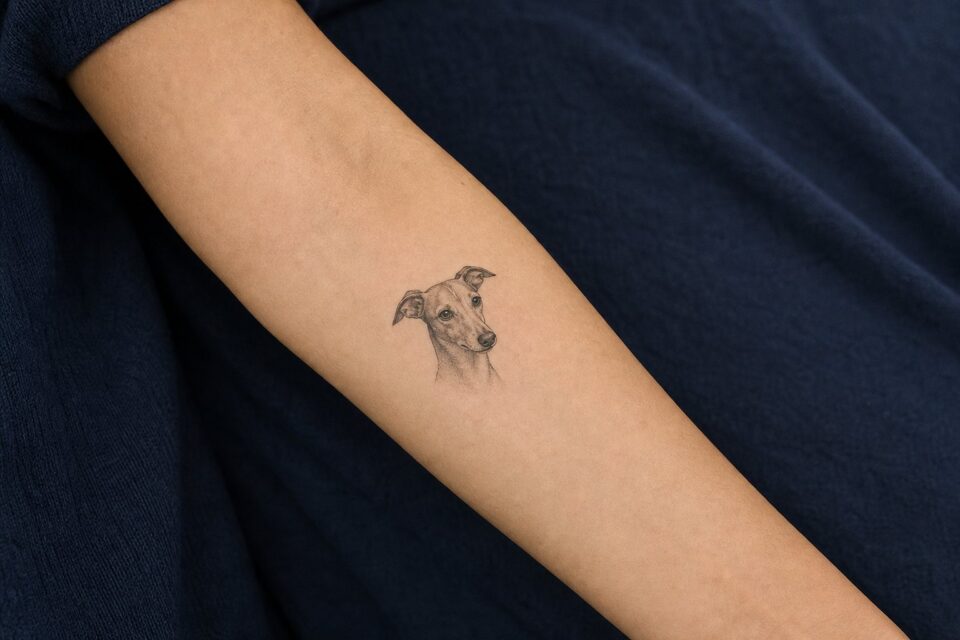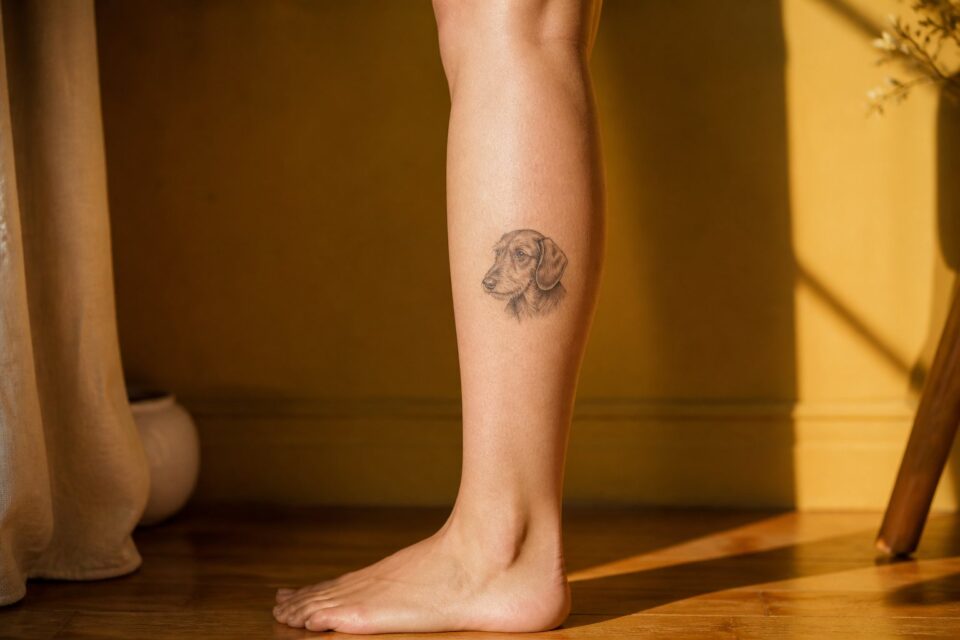

Micro-realism aims to preserve a recognizable sense of depth, texture, or likeness within a relatively small composition. The planning challenge is not simply finding an artist who can add detail. It is deciding which details make the subject itself and what scale the artist considers suitable.
Define what must remain recognizable
A portrait may depend on expression and silhouette. A building may depend on roofline and windows. An object may need one worn edge or distinctive handle. List the three features you would notice first if the reference were reduced.
Be prepared for the artist to suggest a larger size, fewer background elements, or a different crop. Treat those changes as design decisions, not failures to follow the reference.
Choose the feature that identifies the animal
For one pet, likeness may live in the uneven ears. For another, it may be the nose shape, one eye patch, a crooked whisker line, or the way the paws sit when resting. Circle that feature in several photographs. The artist can then protect it while simplifying fur, background, and lighting. A tiny pet portrait should not depend on every hair being visible to feel specific.
Prepare useful source images
- Use the highest-quality original image available.
- Include alternate angles when physical form matters.
- Identify the essential feature instead of circling every detail.
- Explain whether likeness, atmosphere, or a specific object matters most.
- Confirm that you have permission to use photographs you did not create.
Avoid presenting another artist’s tattoo as the reference to reproduce. A finished tattoo can demonstrate composition or mood, but the subject source should come from material connected with your own story.
Research the artist’s relevant work
Look for a consistent body of small realistic pieces, not one viral image. Compare subjects similar to yours: portraits, animals, architecture, objects, or landscapes. If healed examples are available, review them without assuming every person and placement will have the same result.
Read studio information and the artist’s own description of their process. Ask how they decide on scale and what reference quality they require before booking.
Questions about a small pet likeness
- Which three details carry the subject?
- What size do you recommend for this composition?
- Would a tighter crop create a clearer design?
- Which background elements should be removed?
- Does the proposed placement support the shape?
- Can you show comparable work from your portfolio?
- How much freedom do you need to redraw the reference?
Small scale should be a deliberate compositional choice, not a demand to compress every detail. The artist’s judgement is part of the design.
Choose the detail that carries the image
Micro-realism works better when the design has a clear visual priority. Before discussing size, decide what you notice first in the reference. In a pet portrait it might be the ears or a patch around one eye. In a tiny landscape it might be the horizon shape. In a piece of jewelry it might be the outline rather than every reflection.
Print the reference close to the proposed tattoo size and set it on a table. If the important feature disappears, enlarging the whole piece is one option. Another is to simplify the background and give the focal detail more room. This is a design decision, not a failure to copy the photograph.
When reviewing an artist’s portfolio, look beyond freshly photographed work. Older examples show how that artist chooses spacing, contrast, and detail for small pieces over time. Pay attention to subjects similar to yours, since fur, faces, architecture, and metal all ask for different kinds of simplification.
At the consultation, ask the artist to point out what they would remove first and why. A strong answer should connect the edit to readability, placement, or the way they work, rather than simply promising that every detail will fit.
Identify what makes the subject recognisable
Micro-realism is not a promise that every visible detail in a photograph can be reproduced in a tiny space. Start by naming the features that make the subject itself: the slope of a nose, a pet’s ear shape, one architectural opening, the profile of a car, or the light-dark pattern of a flower. Rank those features before discussing size.
A portrait may depend more on the distance between eyes and mouth than on individual eyelashes. A building may need its roofline and one window rhythm, not every brick. The artist’s editing is part of the realism because it protects recognition under real viewing conditions.
Build a small, useful reference set
Choose one primary photograph and up to three supporting images. Label what each adds: accurate colour, side profile, texture, or a detail hidden in the main view. If the source is a person or animal, avoid using a heavily filtered image as the only reference.
Low-resolution screenshots create guesswork. Locate the original file when possible and keep it unedited. For memorial material, tell the artist when an image is the only surviving source so they can explain what can and cannot be inferred responsibly.
Compare two scales without zoom
Ask to see the concept at the smallest scale the artist recommends and one larger option. Print both. View them at arm’s length and place them near the body area. The larger version may actually feel lighter because features and negative spaces are not compressed.
Do not use a phone pinch-zoom to judge the tattoo you will wear. Social photographs often magnify a piece many times beyond life size. A normal-distance body photograph is the more honest reference for proportion and impact.
Give contrast a hierarchy
Choose where the darkest dark, clearest edge, and quietest area belong. If every feature receives equal sharpness, the design can become busy. A strong focal point with softer secondary information creates depth and lets the eye recognise the subject quickly.
Background is not automatically helpful
A frame, shadow, smoke, or decorative plants may support a portrait, but they also consume the detail budget. Ask whether the subject reads better with open skin around it. If context is essential, choose one background clue rather than a miniature scene.
Read healed portfolios by category
Look for healed work at similar sizes and on comparable body areas. Separate portraits, animals, objects, and architecture because success in one does not guarantee equal experience in another. Check whether the artist repeatedly makes good choices about simplification, not just whether one fresh tattoo looks photographic.
Notice image presentation. Normal light, several healing stages, and body context make evaluation easier. Heavy sharpening or only close fresh shots are reasons to ask for more examples, not proof of a problem by themselves.
Offer the design a stable visual plane
Compact realism often benefits from an area with enough width for the subject’s proportions. A very narrow wrist or ankle can force a face, animal, or building into a smaller scale than the idea supports. The upper arm, shoulder, thigh, calf, or forearm may offer a better field depending on the composition.
Let the artist test the stencil on the body. Curvature can change symmetry, and movement can interrupt a focal feature. Choose a primary viewing angle while accepting that the tattoo will never behave like a flat photograph.
Write the brief around priorities
Send the subject story, original reference files, three recognition priorities, placement options, and maximum comfortable size. Add examples from the artist’s own portfolio. Then state which supporting details may be simplified or removed.
The goal is not to win a contest for the most information in the least skin. A successful small realistic tattoo keeps the subject’s identity, mood, and proportions through deliberate editing. That judgement is why the artist matters as much as the photograph.
Compare three crops before adding detail
For a person or animal, test full figure, head and shoulders, and one characteristic profile. For an object or building, compare the whole form, a closer section, and one emblematic detail. Print each crop at the same proposed tattoo size. The tighter crop may preserve recognition with fewer tiny marks.
Do not assume more of the subject produces a more complete memorial. A pet’s curled ear or a doorway from a family home may carry the memory faster than a miniaturised full scene. Choose the crop that keeps emotional identity under ordinary viewing, then allow the artist to rebuild its edges for the body.
Test the crop in greyscale even if you want colour. If recognition collapses without hue, decide whether colour is a fixed structural feature or whether the drawing needs a clearer silhouette. Then test the opposite: remove internal detail and keep only the outer mass. These two reductions show the artist where identity actually lives.
Write the result beside the reference, such as “profile and white chest patch lead; background may disappear.” A priority that precise is more helpful than requesting that the artist keep everything realistic and tiny.