Small American traditional tattoos work best when they keep the style’s strongest habits: a clear outline, a recognizable silhouette, purposeful black, and a limited color plan. Shrinking a complicated flash image is not the same as designing a compact traditional tattoo.
Choose one subject and one main action. A swallow in flight, a single rose, a lucky horseshoe, a small dagger, or a heart with short lettering gives the artist a clearer starting point than a full scene squeezed into a few inches.
Choose a motif with a strong outline
Classic subjects are popular partly because their shapes are easy to recognize. Roses, swallows, cherries, dice, horseshoes, hearts, flames, daggers, and small animal heads can each be simplified while keeping a distinct profile. Personal meaning can come from the version you choose, not only the category.
Start by describing why the subject matters. A swallow might connect to travel, return, a relative, or simply a visual memory. That context helps the artist make choices about posture, direction, color, and supporting detail without copying saved flash.
Edit the rose before reducing it
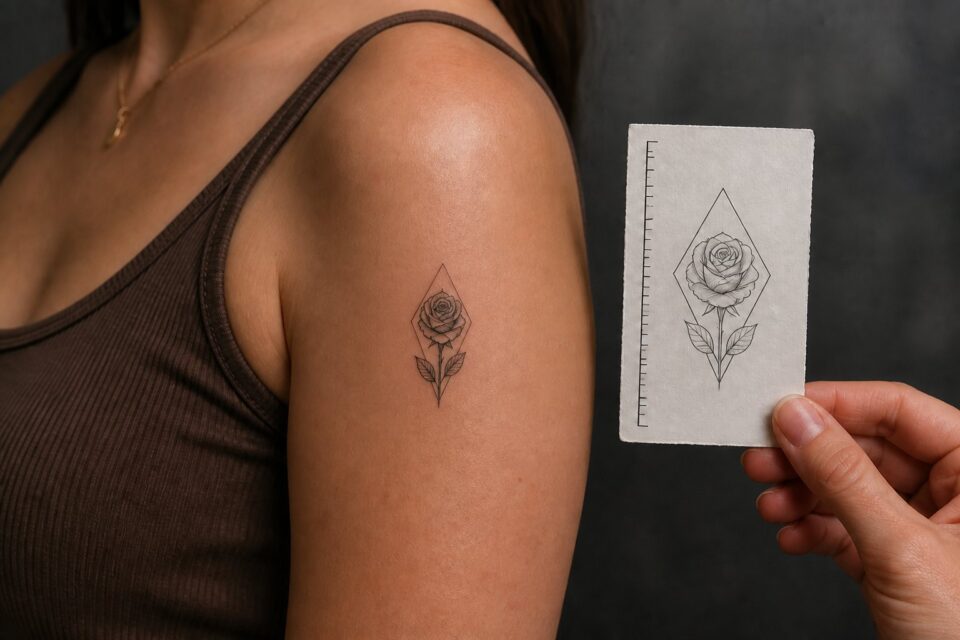
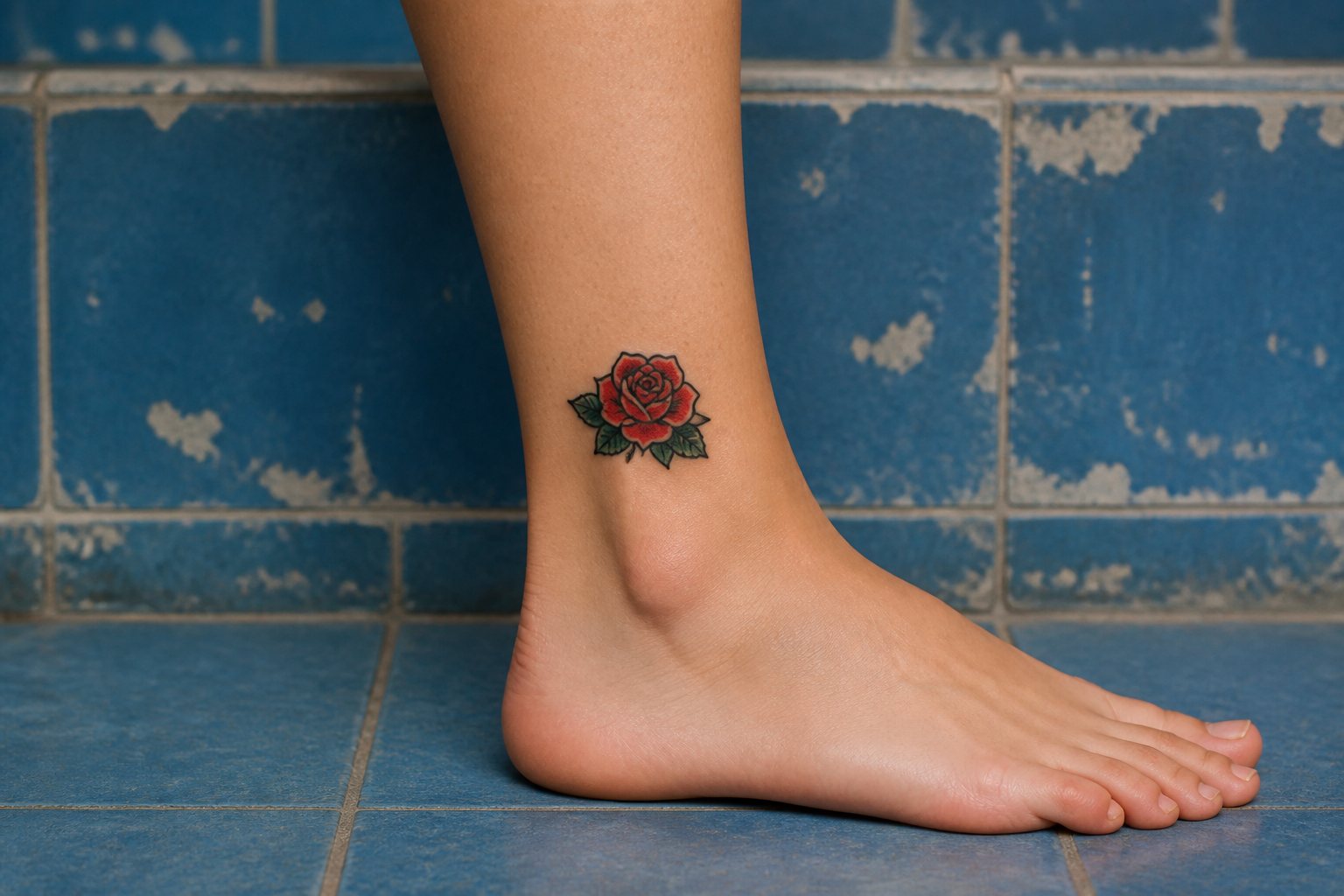
A compact traditional rose needs a clear outer petal rhythm and a centre that does not collapse into a dark knot. Keep fewer, larger petal turns rather than shrinking a full flash rose. One or two leaves can balance the flower without forming a miniature bouquet. View the drawing at true size in colour and in grayscale so the outline and black still carry it if the colours are less prominent.
Let outline and black carry the image
Traditional tattoos often use clear outlines and black shading to hold the design together. At small scale, those dark decisions need room. Too many overlapping objects or narrow spaces can weaken the silhouette, even if they look attractive in a large reference.
Ask which details can be removed before reducing line weight. One leaf on a rose may read better than three tiny leaves. A simple wing shape may hold a bird more clearly than individual feathers drawn beyond the useful scale.
Keep the color plan controlled
A small traditional tattoo rarely needs every available color. Two or three main colors, supported by black and open skin, can create a stronger result. The artist may repeat one color in separate areas to keep the design connected.
Black and grey is also an option if the artist’s portfolio shows that approach. Decide whether color is part of the memory or simply a style preference. A specific red from a family object or a yellow tied to a place may matter more than a broad rainbow palette.
Choose flash or ask for a compact custom piece
Flash can be an excellent route for a small traditional tattoo because the design has already been edited into a clear, tattooable shape. Ask whether it is repeatable, one-time, adjustable, or offered only at a fixed size.
Custom work makes sense when the subject, wording, object, or personal reference needs to change. Bring the story and references, then let the artist draw it in their own traditional language instead of combining pieces from several artists.
Check the tattoo at true size
A traditional design can look simple while still containing several heavy outlines, black shapes, and color areas. View it at the actual proposed size instead of zooming in. The spaces between a wing, body, leaf, or banner should still be easy to understand without magnification.
Try the stencil with the body relaxed and moving. A small swallow may feel energetic when angled along an arm, while a rose may sit more calmly when its main face follows a flatter view. Let the artist adjust the angle instead of insisting on the orientation of a saved image.
If lettering is included, keep it short and ask what size the letterforms need. A heart or banner can survive without text if the words make the design crowded. Decide whether the phrase or the image carries the meaning before asking both to fit into a small area.
Take one photograph of the stencil from close range and another from a few steps away. The second view should still show the main subject. If it turns into an unclear dark patch, discuss a simpler version or a little more size before treating the stencil as settled.
Look at the design grammar, not a filter
American traditional tattoos are often recognised through decisive outlines, simplified shapes, controlled colour, readable silhouettes, and compact compositions. Applying a cream background or “vintage” texture to any drawing does not create that structure. Study how experienced artists reduce a subject and place black, colour, and open skin.
Choose the subject’s defining action. A diving bird, coiled snake, open rose, clenched hand, or upright torch carries movement before decorative details are added.
Personalise a familiar subject through source and action
Roses, daggers, swallows, hearts, panthers, and eagles are part of a familiar vocabulary. You can work within it without asking for an existing tattoo. Bring a real flower, object, phrase, animal posture, or family reference and let the artist translate it into their own traditional drawing language.
A known subject does not have one compulsory meaning. State your association plainly. Avoid inventing historical symbolism to make the idea sound more legitimate.
Give colour a clear job
Colour can separate overlapping forms, establish a focal point, or connect several tattoos. A limited palette often strengthens readability. If one colour has personal importance, mark it as fixed and allow the artist to balance the rest.
Black and grey traditional work can still rely on bold outline, strong shadow, and open skin. Do not request delicate grey rendering while expecting the same graphic effect as a high-contrast piece; discuss the tradeoff using the artist’s portfolio.
Match scale to the silhouette
A subject with crossed objects, banner text, leaves, and internal pattern needs more room than a single rose head. Print the proposal at size. If the outline reads but the interior becomes crowded, simplify or enlarge rather than thinning every mark.
Judge from the whole limb
Traditional pieces often live as individual tattoos with deliberate gaps or as parts of a larger composition. View the design from normal distance and consider nearby work. A compact bold shape may carry more presence than a larger weak outline.
Use banners and lettering selectively
Short words and names can become part of the shape, but long phrases force small letters or oversized banners. Decide whether language is essential. A separate lettering piece or private source mark may serve better than wrapping every subject in text.
Verify spelling, dates, and names yourself. For another language, consult a qualified speaker. The visual familiarity of a banner does not make the wording automatically accurate.
Choose an artist whose personal voice you like
Within the broad style, artists differ in anatomy, faces, flowers, colour, humour, and composition. Look through repeated healed work rather than choosing from one flash sheet. Notice how they draw the exact subjects you care about.
If selecting flash, understand what changes are permitted. Some designs are repeated; others are one-off. If commissioning custom work, bring story and sources without asking the artist to imitate another traditional tattooer’s specific drawing.
Keep historical claims modest and sourced
The style developed through many tattooers, clients, shops, military and maritime circulation, printed references, and changing communities. A short blog post cannot turn every motif into a fixed historical code. When history matters to your choice, seek museum collections, archives, books, and artists who document their sources.
Your tattoo can belong to this visual tradition while telling a contemporary personal story. Readability comes from the artist’s command of shape and contrast; originality comes from the source, arrangement, and hand that redraws it for you.
Decide whether flash or custom serves the idea
Traditional flash lets you choose a complete drawing in an artist’s voice. Ask whether it is repeatable, claimable once, and adaptable in colour or size. If the exact image is what you love, changing it heavily may defeat the point of selecting flash.
Custom work fits when a personal object, animal, flower, phrase, or body composition must shape the drawing. Give the artist those sources and allow them to use the visual grammar they already practise. Do not bring another tattooer’s flash and request a “custom version.”
When comparing the routes, ask which part you want to own: the experience of selecting a complete artist-made image, or the experience of translating personal material with that artist. Both involve authorship and consent. Neither is more authentic by default.
If you choose flash, save the original listing and terms. If custom, save the source packet and agreed priorities. Keeping the process clear prevents later confusion about exclusivity, reuse, and what changes were actually commissioned.
Ask how the design will relate to existing tattoos. A bold traditional piece may need a deliberate gap or a comparable visual weight nearby. The artist can adjust scale and orientation while keeping the drawing’s grammar intact.